Articles for

CIOs

Technology leaders aligning identity strategy with business outcomes.

Showing 25 posts

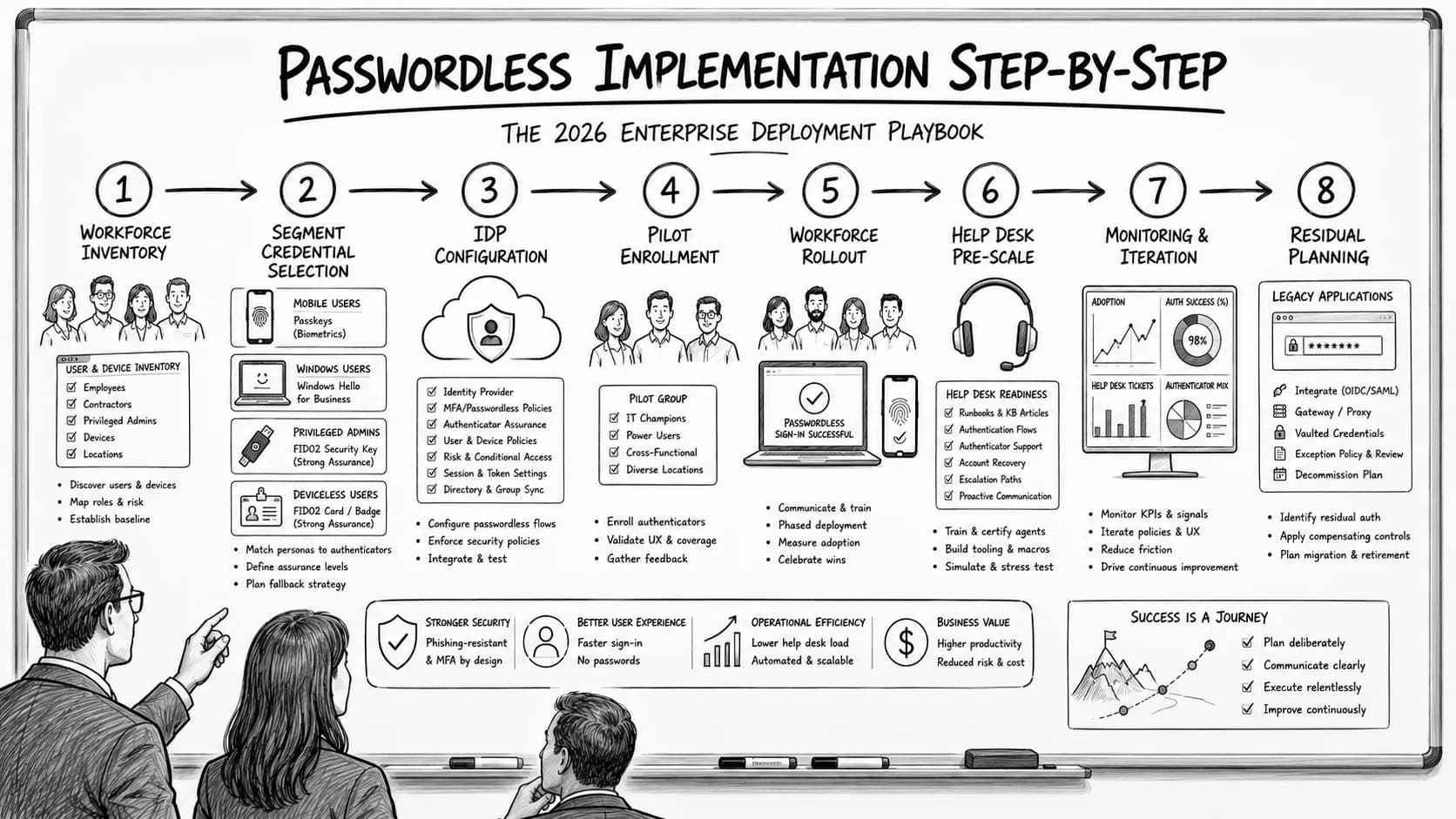
Passwordless implementation step-by-step enterprise 2026 deployment playbook — the eight-step deployment sequence (workforce inventory and segmentation, credential-class selection per segment mapping platform passkeys to smartphone workforce and Windows Hello for Business to Windows workstations and hardware FIDO2 for privileged step-up and deviceless FIDO2 via Identity Challenge Card for smartphone-unavailable segments, IdP configuration for Conditional Access and passkey enrollment policy, pilot enrollment with 5-15% of workforce, workforce rollout with change management and role-targeted communication, help desk pre-scaling for first 90 days of cutover, monitoring and iteration against pilot feedback, and passwordless-fallback residual planning for legacy applications and service accounts), the go/no-go criteria at each phase gate, and the deployment discipline that produces successful passwordless rollout at workforce scale.
Passwordless

Passwordless Implementation Step-by-Step: The 2026 Enterprise Deployment Playbook

Enterprise passwordless implementation runs on a specific eight-step deployment sequence — workforce inventory, credential-class selection per segment, IdP configuration, pilot enrollment, workforce rollout with change management, help desk pre-scaling, monitoring and iteration, and passwordless-fallback residual planning. The 2026 enterprise reference on the step-by-step deployment playbook, the go/no-go criteria at each phase gate, and the discipline that produces successful passwordless rollout at workforce scale.

15 de julho de 2026Andre Arantes
Read more
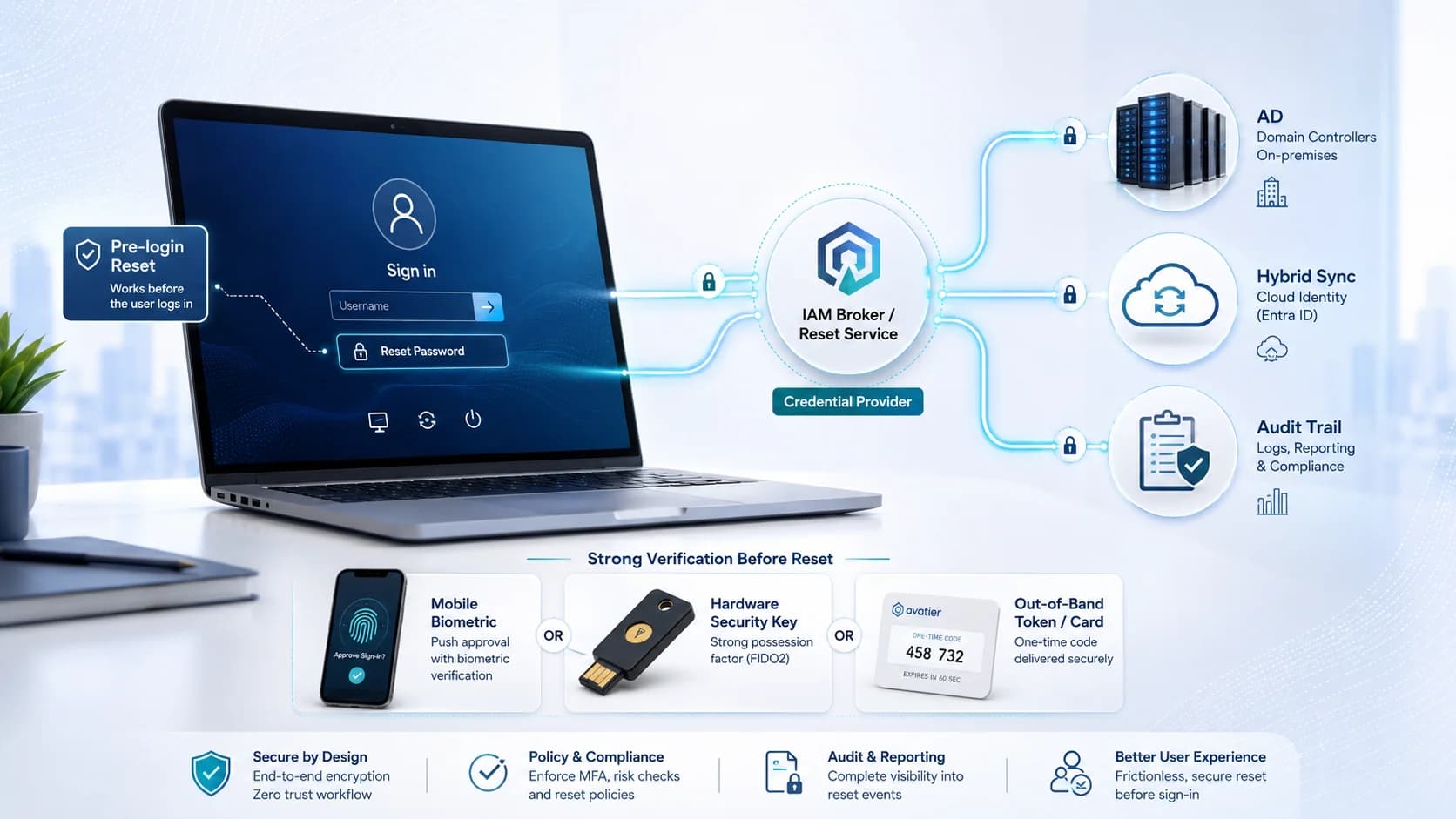
Passwordless authentication for Microsoft enterprise 2026 reference — the Microsoft-stack passwordless architecture composing Windows Hello for Business as the primary Windows authentication factor with TPM 2.0 attestation, Entra ID as the identity broker for cloud application access with SAML and OIDC federation, Windows Autopilot and Intune for device provisioning with automated WHfB enrollment, the hybrid deployment patterns bridging on-premises AD to Entra ID via Azure AD Connect and Password Writeback, FIDO2 security keys and platform authenticators via Microsoft-supported passkey providers, and the deployment discipline that produces phishing-resistant workforce authentication across the Microsoft estate including step-up patterns for privileged access and deviceless FIDO2 for smartphone-unavailable segments.
Passwordless

Passwordless Authentication for Microsoft Enterprise: The 2026 Reference

Microsoft enterprise environments have a specific passwordless deployment architecture — Windows Hello for Business as the primary Windows authentication factor, Entra ID as the identity broker for cloud application access, Windows Autopilot and Intune for device provisioning, and the hybrid deployment patterns that bridge on-premises AD to Entra ID. The 2026 enterprise reference on the Microsoft-stack passwordless architecture, the WHfB enrollment ceremony discipline, and the deployment pattern that produces phishing-resistant workforce authentication across the Microsoft estate.

14 de julho de 2026Andre Arantes
Read more
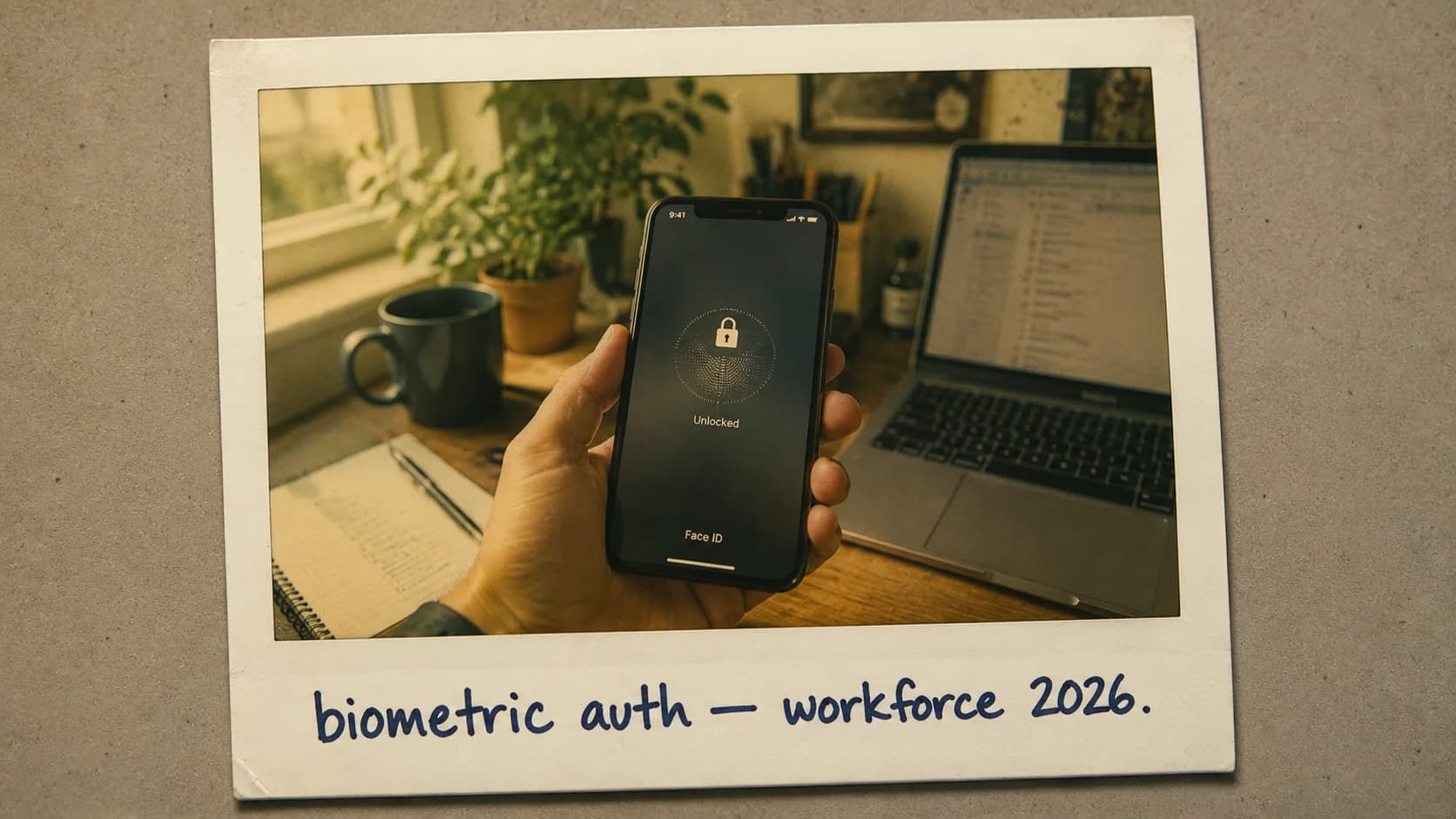
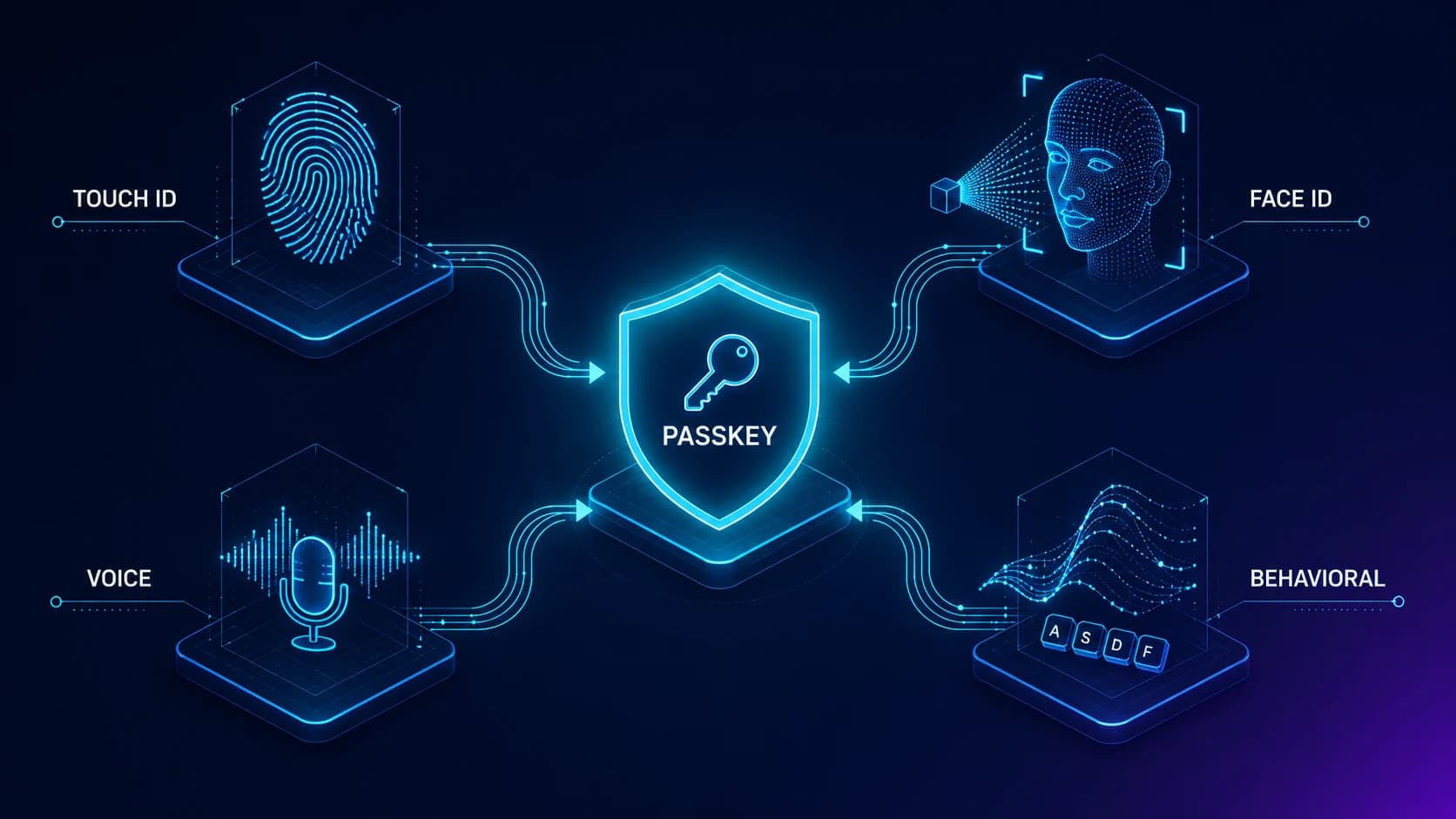
Biometric authentication on mobile devices 2026 — Face ID Touch ID Windows Hello for Business and Android biometric authentication, the secure enclave architecture that protects the credential, the FIDO2 authentication ceremony that composes platform biometric unlock with cryptographic assertion, the enterprise-deployment patterns for mobile-first workforces, and the segments where mobile biometric MFA still needs step-up to hardware keys or deviceless credentials.
MFA & Authentication

Biometric Authentication on Mobile Devices: The 2026 Enterprise Reference

Mobile biometric authentication has quietly become the primary phishing-resistant credential class for enterprise workforce authentication. The 2026 enterprise reference on what's actually happening on modern mobile devices, how platform passkeys and biometric unlock compose into FIDO2 authentication, and where mobile biometric MFA still needs step-up to a hardware key or deviceless credential.

6 de julho de 2026Andre Arantes
Read more
Passwords to biometrics enterprise shift 2026 — the organizational migration architecture for the workforce authentication rewrite that most enterprises are somewhere in the middle of, distinct from the mobile-biometric-specific technical architecture that dominates operator-level attention, covering the six-phase migration sequence (opt-in enablement, privileged-account hardening, default biometric preference, onboarding-first, workforce-wide enrollment, application-class deprecation), the risk-tiered rollout that prioritizes high-impact applications and high-privilege accounts first, the federation-parallel-run architectural pattern that lets password and biometric authentication coexist during the multi-year transition without forcing a big-bang cutover, the fallback design for scenarios where biometrics aren't operationally available (workforce segments without smartphones, biometric enrollment failures, temporary access needs, sensor damage or degradation), the change management discipline that determines whether the migration succeeds at workforce scale or produces support-burden crisis, and the metrics that show whether the migration is actually converting the workforce or accumulating opt-in adoption without displacing password reliance.
Passwordless

Passwords to Biometrics: The Enterprise Shift 2026 — Migration Architecture for the Workforce Authentication Rewrite

The enterprise shift from passwords to biometrics isn't a technology purchase — it's a multi-year architectural migration with distinct phases, risk-tiered rollout, federation-parallel-run patterns, and fallback design that determines whether the shift succeeds or produces a support-burden crisis. The 2026 organizational reference on how the migration actually runs at workforce scale, distinct from the mobile-biometric-specific architecture that dominates operator-level attention.

1 de julho de 2026Andre Arantes
Read more
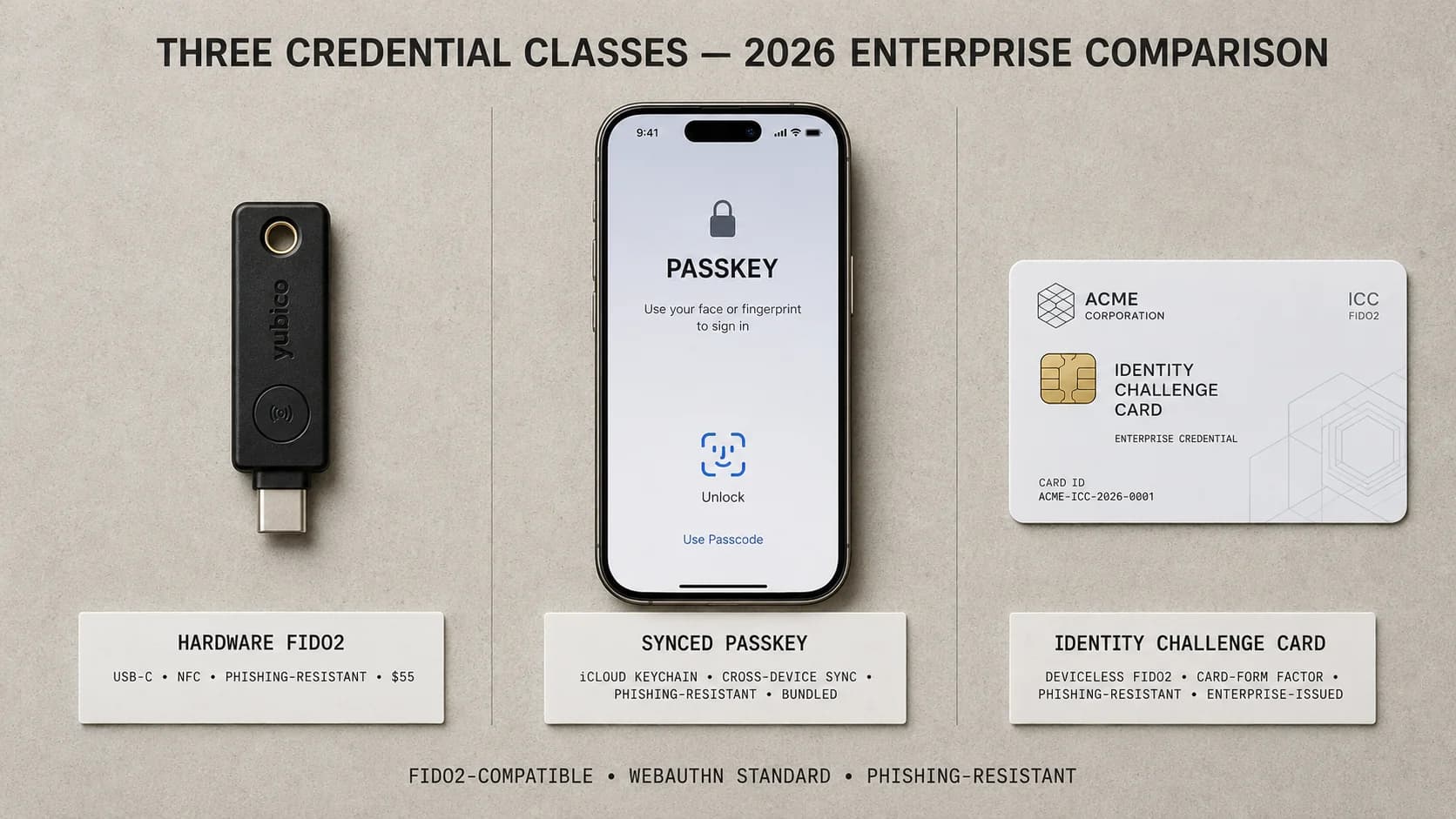
Hardware FIDO2 keys vs passkeys for enterprise 2026 — the four buyer dimensions that distinguish hardware keys from passkeys at the operational layer (portability, recovery, cost at scale, credential sovereignty), the five enterprise use cases mapped to the credential class that fits each (privileged operators favor hardware keys, distributed workforces favor synced passkeys, deviceless segments use the Identity Challenge Card, regulated environments compose multiple classes, AI agents need scoped delegation tokens), the failure modes of each, and the composition pattern that mature 2026 deployments use to cover the workforce comprehensively without forcing a single credential class across all segments.
Passwordless

Hardware FIDO2 Keys vs Passkeys for Enterprise 2026

Both hardware FIDO2 keys and passkeys deliver phishing-resistant authentication using the WebAuthn standard. Operationally they're substantially different — portability, recovery patterns, cost at scale, and credential sovereignty all diverge. The 2026 enterprise buyer's reference on which credential class fits which workforce segment, where each breaks, and why most mature deployments compose both.

25 de junho de 2026Andre Arantes
Read more
Biometrics in sci-fi movies a 2026 reality check — six decades of cinematic biometric authentication (Minority Report iris scanning, Mission Impossible retinal locks, Gattaca DNA verification, Blade Runner Voigt-Kampff testing, Demolition Man thumbprint cryogenic identity, Her voice-bound ambient identity), what sci-fi got right (ubiquity and seamlessness), what sci-fi got hilariously wrong (the dramatic infrastructure, the absence of cryptographic ceremonies, the lack of consent frameworks), and what workforce biometric authentication actually looks like in 2026 (Touch ID, Face ID, Windows Hello, passkeys, hardware FIDO2 keys, deviceless Identity Challenge Card).
Identity & Access Trends

Biometrics in Sci-Fi Movies: A 2026 Reality Check

For sixty years, sci-fi has been showing us biometric authentication — palm scans, retinal lasers, voice prompts, faces unlocking doors. Now most of us authenticate with biometrics every morning before we've finished our coffee. What did sci-fi get right, what did it get hilariously wrong, and what does workforce biometric authentication actually look like in 2026?

25 de junho de 2026Brian Winckel
Read more
Why MFA alone won't stop your next breach — and what IGA adds 2026: the four attack patterns MFA cannot structurally defeat (toxic entitlement accumulation, insider misuse, shadow admin accounts, privileged session abuse), the IGA layer that catches them above the authentication layer, the architectural composition of MFA + IGA + ITDR, and the operational reality that strong authentication is necessary but never sufficient.
Zero Trust

Why MFA Alone Won't Stop Your Next Breach — And What IGA Adds 2026

MFA is the credential class that defeats phishing and credential theft. It cannot defeat the four attack patterns that don't require defeating MFA — toxic entitlement accumulation, insider misuse, shadow admin accounts, and privileged session abuse. The 2026 enterprise reference on the IGA layer above MFA that closes the gap MFA structurally cannot.

24 de junho de 2026Henrique Ferreira
Read more

Identity for AI agents and agentic authentication 2026 — the four agentic architectures (user-delegated, autonomous, hybrid orchestrated, scoped impersonation), the protocol stack that authenticates AI agents to enterprise systems (OAuth 2.1, MCP, JWT bearer, agent identity tokens), the delegation chain that preserves user authority through the agent's actions, and the operational guardrails that prevent over-scoped access, token theft, and prompt-injection coercion.
Identity & Access Trends

Identity for AI Agents and Agentic Authentication 2026

AI agents need identities, credentials, and authentication ceremonies of their own — separate from the humans they act on behalf of, separate from the service accounts they're often confused with. The 2026 enterprise reference on the architectures that issue agent identity, the protocols that authenticate them, the delegation chain that keeps user authority intact, and where agentic auth deployments break.

24 de junho de 2026Leonardo Cuenca
Read more
Continuous authentication for high-risk workforces 2026 — the architectural shift from episodic authentication at session establishment to continuous re-evaluation at every protected resource boundary, the runtime signal stream (device posture changes, behavioral drift, geographic anomalies, threat-intelligence updates, session-context shifts), the step-up flows that respond to assurance decay, and the high-risk segments (privileged operators, financial-system users, executives, defense workloads) where the pattern is operationally expected.
Zero Trust

Continuous Authentication for High-Risk Workforces 2026

Authentication at session establishment isn't enough for privileged users, financial-system operators, defense workloads, or executive accounts. Continuous authentication re-evaluates identity assurance at every protected resource access, every session checkpoint, every risk-signal change. The 2026 enterprise reference on the architecture, the signal stream, and the high-risk segments where the pattern is now expected.

24 de junho de 2026Henrique Ferreira
Read more
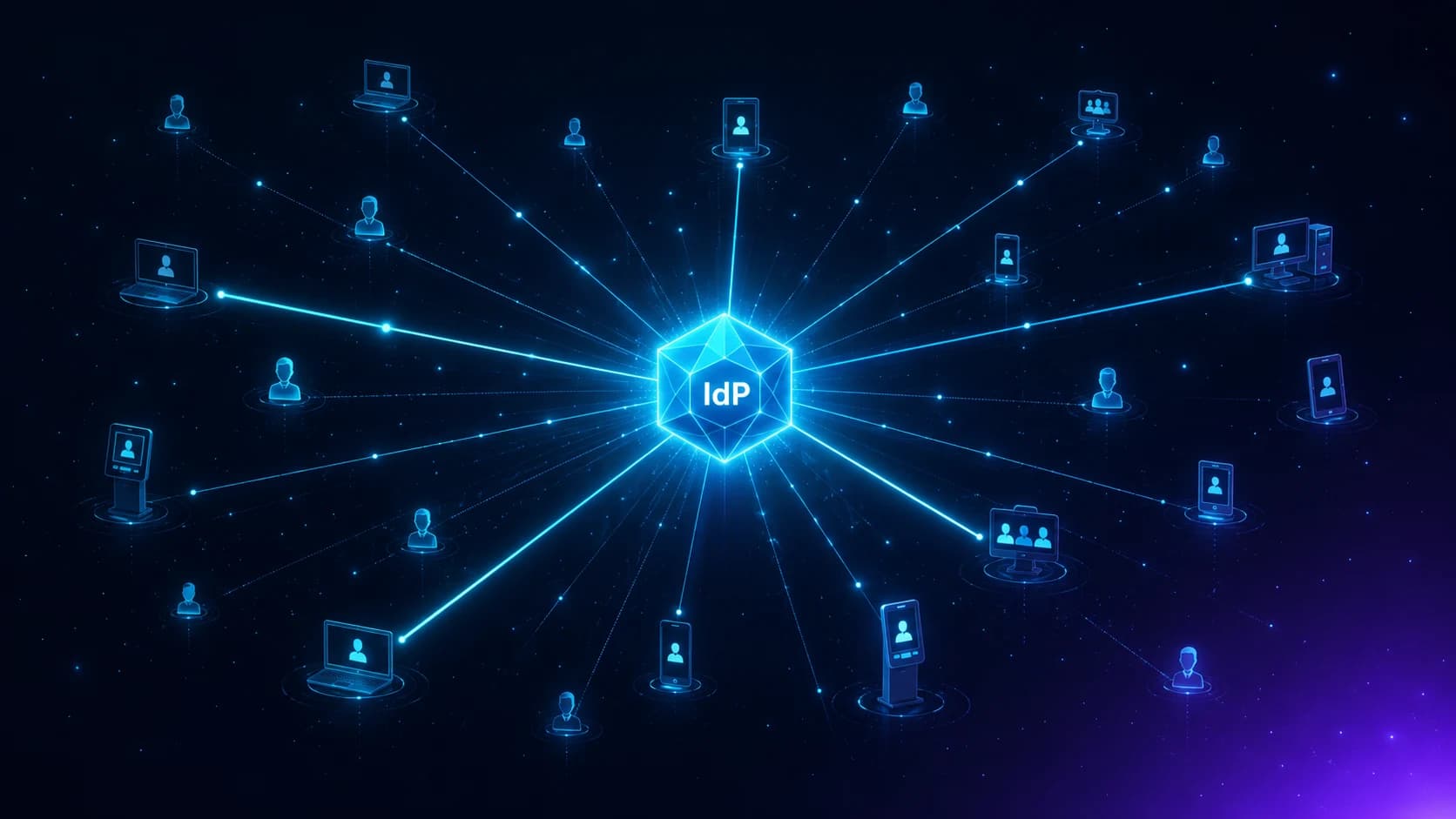
The 2026 enterprise reference on SSO architecture for distributed workforces — remote employees, hybrid schedules, contractor populations, partner organizations, and education-sector users — covering the federation protocols (OIDC, SAML, OAuth, SCIM), where SSO breaks for non-corporate-network users, and the architecture that composes SSO with MFA, lifecycle governance, and recovery workflows.
Identity & Access Trends

SSO Architecture for Distributed Workforces in 2026

Single Sign-On for a distributed workforce — remote employees, hybrid schedules, contractor populations, partner organizations, and education-sector users — isn't the same problem it was when SSO meant SAML inside a corporate intranet. The 2026 reference on what SSO actually solves, where the architectural breakage modes live, and the federation patterns that survive contact with mixed workforces.

18 de novembro de 2024Henrique Ferreira
Read more
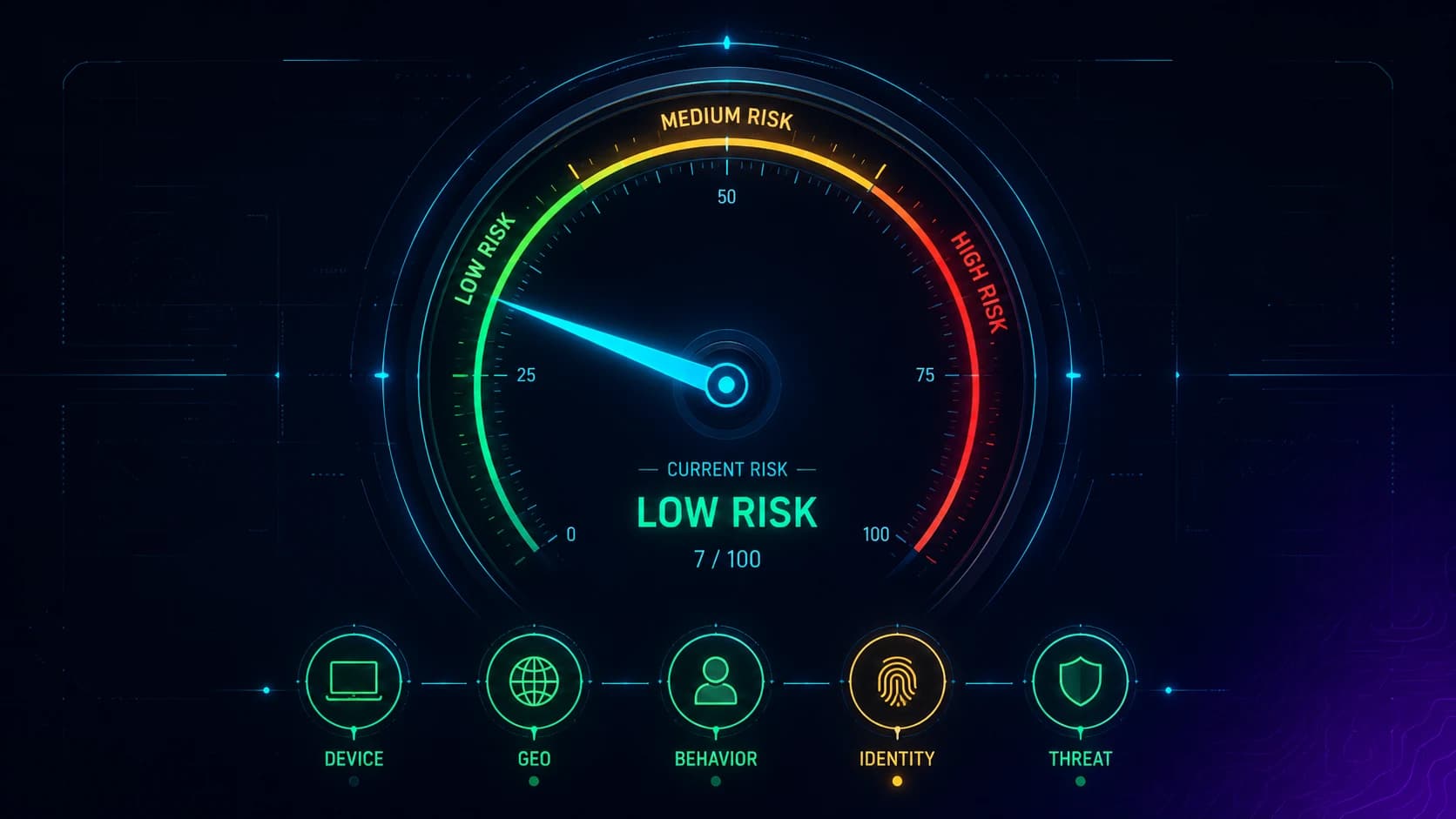
Adaptive authentication and risk-based MFA for enterprise 2026 — the runtime risk signals that feed adaptive decisions (device posture, geographic context, behavioral patterns, impossible travel, threat intelligence), the step-up authentication flows that respond to risk, and the architecture that composes adaptive logic with phishing-resistant MFA without producing user-experience friction.
MFA & Authentication

Adaptive Authentication and Risk-Based MFA for Enterprise 2026

Adaptive authentication evaluates risk signals at every session and adjusts the authentication requirement to match — stronger MFA when risk is high, frictionless access when risk is low. The 2026 enterprise reference on the signals that actually matter, the architecture that composes risk with phishing-resistant MFA, and where adaptive deployments break.

16 de junho de 2026Leonardo Cuenca
Read more
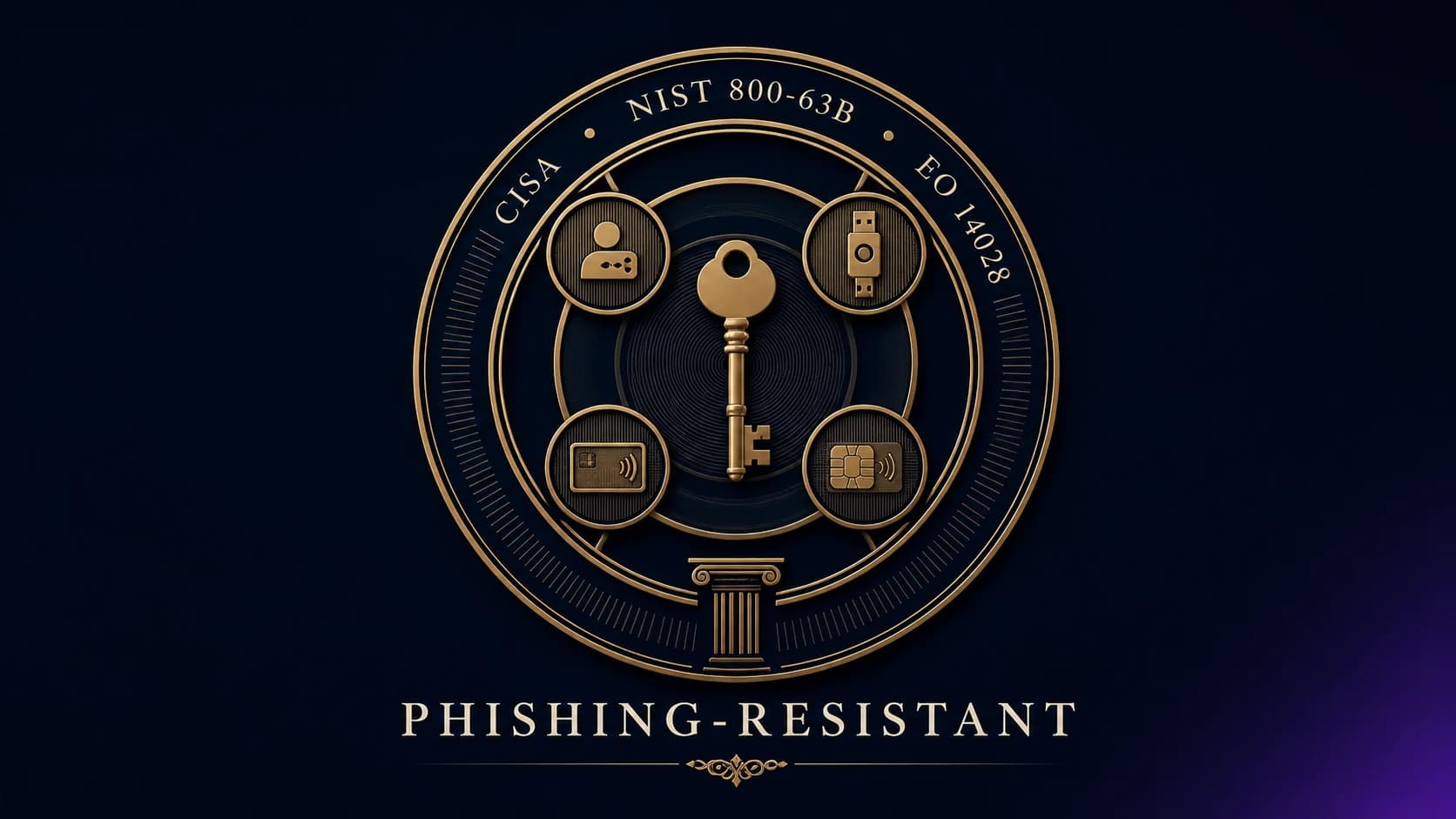
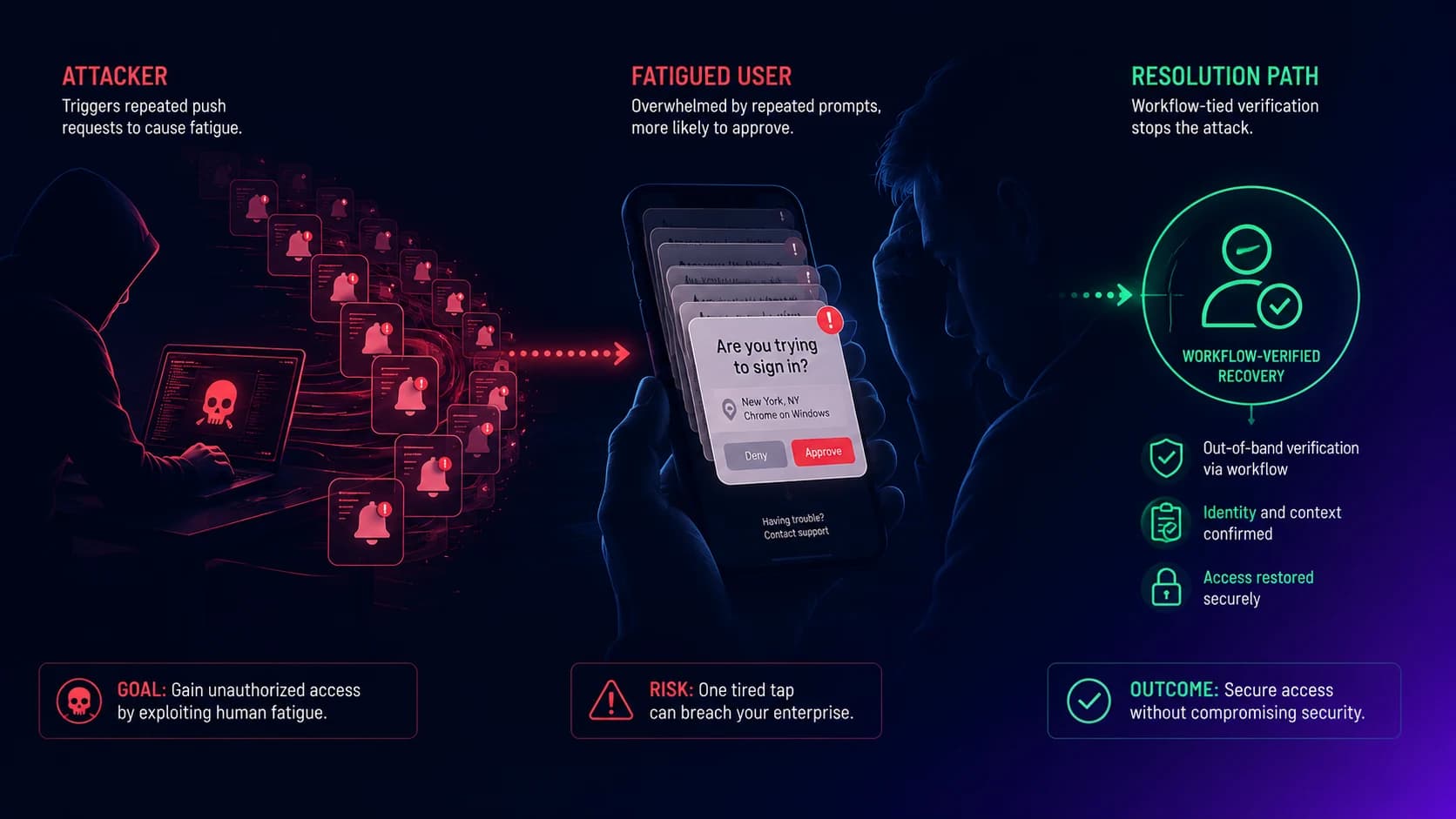
Phishing-resistant MFA for enterprise in 2026 — the regulatory framing (CISA, NIST 800-63B Rev. 4, Executive Order 14028), what qualifies (passkeys, hardware FIDO2 keys, deviceless FIDO2 cards, smart cards), what does not (SMS OTP, push-approval, soft-OTP), and the deployment architecture across managed devices, frontline, privileged accounts, and recovery channels.
MFA & Authentication

Phishing-Resistant MFA for Enterprise in 2026

Phishing-resistant MFA is the term CISA, NIST 800-63B Rev. 4, and Executive Order 14028 use for the authentication category that survives the attack patterns that defeated SMS, OTP, and push-approval MFA. The 2026 enterprise reference on what qualifies, what doesn't, and the deployment architecture across mixed workforces.

15 de junho de 2026Andre Arantes
Read more