OTP Failure Case Scenarios: The 2026 Enterprise Reference
One-time passwords fail in specific, patterned ways at enterprise scale — SMS interception through SS7 and SIM-swap, TOTP time drift and device loss, push-notification MFA fatigue, hardware token failures, and the recovery-channel gap that determines whether the failure produces a help desk ticket or a security incident. The 2026 enterprise reference on how OTP actually fails in production and what to deploy instead.
One-time passwords fail in specific, patterned ways at enterprise scale — SMS interception through SS7 and SIM-swap, TOTP time drift and device loss, push-notification MFA fatigue, hardware token failures, and the recovery-channel gap that determines whether the failure produces a help desk ticket or a security incident. The 2026 enterprise reference on how OTP actually fails in production and what to deploy instead.
- OTP fails in five patterned ways at enterprise scale — SMS interception via SS7 abuse and SIM-swap attacks, TOTP time drift and device loss, push-notification MFA fatigue attacks, hardware token battery and physical loss, and the recovery-channel gap that determines whether the failure lands as a help desk ticket or a security incident.
- SMS-OTP is the most-compromised category. The SS7 signaling network is exploitable by state and criminal actors; SMS delivery routes through it. SIM-swap attacks — the attacker socially engineers the mobile carrier into transferring the victim's number to an attacker-controlled SIM — bypass SMS-OTP entirely. High-value targets have lost accounts, funds, and enterprise access to SIM-swap attacks; the category is functionally deprecated as a phishing-resistant credential class in 2026.
- TOTP is meaningfully better than SMS but still fails in predictable ways. Time drift between the authenticator device and the server produces false-rejection under specific conditions. Device loss produces the 'user can't log in and doesn't remember their backup codes' pattern at scale. Cross-device TOTP setup requires manual re-enrollment that doesn't propagate cleanly across the workforce's device fleet.
- Push-notification OTP produces MFA fatigue attacks — the attacker submits repeated authentication attempts, the user receives repeated push prompts, and eventually the user approves one out of frustration or confusion. The 2023-2025 breach cycle documented many high-profile incidents from this pattern; the mitigation is number-matching (the user has to enter a number displayed on the login screen into the push prompt) rather than yes/no approval, but the fundamental pattern remains vulnerable to attentive social engineering. Covered depth in the [MFA Fatigue Attacks piece](/en/blog/mfa-fatigue-attacks-defense-patterns-2026/).
- The 2026 direction is phishing-resistant credentials that don't fail these ways — platform passkeys and biometric on managed devices, hardware FIDO2 keys for step-up, and the Avatier Identity Challenge Card for deviceless workforce segments. OTP moves from primary factor to legacy fallback while the phishing-resistant baseline covers the workforce authentication surface.
One-time passwords have been the dominant enterprise MFA factor for a decade. Six-digit codes delivered by SMS. Six-digit codes generated by an authenticator app. Push notifications the user approves on their phone. Hardware tokens that display a rolling six-digit code the user types in. The pattern has been so ubiquitous that many enterprise IAM programs still treat "MFA" and "OTP" as synonyms.
The problem is that OTP fails in specific, patterned ways at enterprise scale — and the failure modes have matured enough by 2026 that the credential class is no longer the phishing-resistant primary factor most enterprises need. This piece is the 2026 enterprise reference on how OTP actually fails in production. The five failure categories, what each one costs at scale, and the phishing-resistant credential classes that eliminate each failure category. Companion pieces cover adjacent layers — the OTP Pros, Cons, and Better Alternatives piece covers the credential-class tradeoffs; the Phishing-Resistant MFA piece covers the WebAuthn credential-class foundation; the MFA Fatigue Attacks piece covers the specific push-notification failure category in depth; the Biometric Authentication Mobile piece covers the platform passkeys-and-biometric replacement.
The five OTP failure categories
Five categories cover most OTP failures at enterprise scale. Each has specific attack surface, specific operational-cost pattern, and specific mitigation profile.
Category 1: SMS interception via SS7 abuse and SIM-swap. The SS7 signaling network that global mobile networks use for signaling is exploitable by state actors and increasingly by criminal groups. SMS delivery routes through SS7; researchers have demonstrated SMS interception at scale for over a decade. SIM-swap attacks — the attacker socially engineers the mobile carrier into transferring the victim's number to an attacker-controlled SIM — bypass SMS delivery entirely. Once the attacker controls the SIM, they receive the SMS-OTP codes and the victim has no visibility into the attack. Both attack modes have produced high-profile incidents.
Category 2: TOTP time drift and device loss. TOTP — RFC 6238 — depends on synchronized clocks. Clock drift beyond the server's tolerance window produces false-rejection. Device loss (lost, stolen, factory-reset, migrated) requires re-enrollment; users who didn't save the backup codes issued at initial enrollment are locked out until help desk performs identity verification. Cross-device propagation requires manual per-device enrollment because TOTP doesn't sync the way passkeys do.
Category 3: Push-notification MFA fatigue. The attacker submits repeated authentication attempts; the victim receives repeated push prompts; eventually the victim approves one. The 2023-2025 breach cycle documented multiple high-profile incidents from this pattern. Mitigations (number-matching, approve-deny buttons) reduce but don't eliminate the vulnerability — the fundamental pattern depends on user attention and judgment being reliable under fatigue conditions, which they're not.
Category 4: Hardware token failures. Battery death on time-based tokens. Physical loss, damage, or theft. Firmware bugs on older tokens. Hardware tokens are more secure than SMS or TOTP against remote attacks but produce their own operational-cost pattern — the enterprise has to distribute tokens, replace them on failure, and support the recovery workflow when they fail.
Category 5: The recovery-channel gap. When the OTP factor fails — device lost, token battery dead, SMS not arriving — whatever recovery mechanism the enterprise deploys becomes the new attack surface. Email-based recovery is only as secure as the user's email account. Security questions are trivially social-engineerable. Help desk verification is only as secure as the help desk's identity-verification discipline. Backup codes require the user to have saved them, which most users didn't. The recovery layer is often less secure than the OTP layer it's recovering from — the Beyond Foundational MFA piece covers the recovery-channel architecture depth.
The five categories compound. SMS-OTP fails to SS7 and SIM-swap. TOTP fails to drift and device loss and recovery-channel weakness. Push-OTP fails to MFA fatigue and recovery-channel weakness. Hardware tokens fail to physical loss and recovery-channel weakness. Every OTP category eventually depends on the recovery layer, which is often the weakest link.
 Five failure modes. Four attack surfaces. One recovery-channel gap that lands as either a help desk ticket or a security incident depending on how well the recovery layer was designed.
Why SMS-OTP is functionally deprecated in 2026
SMS-OTP has moved from "widely deployed baseline MFA" to "no longer suitable for phishing-resistant authentication" over the 2019-2025 window. Three attack categories drove the shift.
SS7 abuse. The Signaling System No. 7 protocol used by global mobile networks is decades old, designed in an era of trusted telecommunications operators, and structurally exploitable by any party that gains SS7 access. State actors have SS7 access; researchers have demonstrated that criminal groups have obtained SS7 access through gray-market brokerage. The exploitation intercepts SMS delivery, forwards SMS to attacker-controlled numbers, and produces MFA bypass without touching the victim's device. The vulnerability isn't practically fixable — replacing SS7 requires replacing global telecommunications infrastructure — and SMS-OTP delivered through SS7 is functionally compromised as a phishing-resistant credential class.
SIM-swap attacks. The attacker calls the victim's mobile carrier posing as the victim, provides social-engineering answers to identity-verification questions (often derived from public information or prior data breaches), and requests the carrier port the victim's number to an attacker-controlled SIM. Carriers have improved defenses (SIM-swap holds, in-store verification requirements, out-of-band notifications) but the attack still works often enough that the FBI, FTC, and multiple state financial regulators have issued specific SIM-swap advisories. High-value SIM-swap incidents have moved crypto assets, drained bank accounts, and compromised executive email — the category is well-documented and the mitigations are known to be imperfect.
Delivery reliability. SMS delivery is inconsistent under specific conditions. International roaming produces delays. Network congestion delays delivery. Carrier-side outages fail delivery entirely. Enterprise users depending on SMS-OTP hit false-rejection cases that don't correspond to attacker activity — the SMS just didn't arrive — and cascade into help desk tickets. The operational cost is real.
The 2026 posture from NIST 800-63B Rev. 4 walked back the earlier "restricted" designation on SMS-OTP but explicitly notes it isn't appropriate for high-impact authentication. Modern enterprise deployments have moved primary authentication to phishing-resistant credentials (platform passkeys, hardware FIDO2, deviceless FIDO2 via Identity Challenge Card) with SMS-OTP retained only as a legacy fallback for specific migration cases.
 Three attack surfaces combine to make SMS-OTP unsuitable as a phishing-resistant credential class in 2026. SS7 isn't practically fixable; SIM-swap defenses are imperfect; delivery reliability produces its own operational cost.
TOTP failure modes at scale
TOTP is meaningfully better than SMS-OTP — no SS7 exposure, no SIM-swap surface, delivery-independent — but still produces predictable failure patterns at enterprise scale.
Time drift. The TOTP algorithm depends on synchronized clocks between the authenticator (typically Google Authenticator, Microsoft Authenticator, or 1Password on the user's phone) and the authentication server. If the authenticator's clock drifts more than the server's tolerance window (typically 30-90 seconds), authentication fails with a valid-looking code. Users with heavily drifted device clocks — older phones with degraded time-sync, factory-reset devices, devices where automatic time synchronization is disabled, devices used across time zones without correct settings — hit false-rejection cases at meaningful rates. The pattern produces help desk tickets that look like authentication problems but are actually clock-sync problems.
Device loss. When the user's phone is lost, stolen, factory-reset, or migrated to a new device, the TOTP secrets don't automatically follow. The user needs to re-enroll each authenticator, and if they didn't save the backup codes issued at initial enrollment (many users don't), they're locked out of enterprise resources until the help desk performs identity verification and re-issues the enrollment. This is a persistent enterprise cost — help desk tickets for TOTP device loss run at 0.5-2% of the workforce per quarter across typical enterprise deployments.
Cross-device propagation. TOTP doesn't sync across the user's device fleet the way passkeys do. The user needs to enroll TOTP on each device independently — phone, tablet, laptop, backup device — and workforce users with multiple devices hit friction from the manual per-device enrollment. Adding a new device is a re-enrollment ceremony, not a sync operation.
The 2026 replacement is passkeys. Same phishing-resistant properties as TOTP. But passkeys sync across the user's device fleet through iCloud Keychain / Google Password Manager / Microsoft Entra ID / third-party credential managers, don't have clock-drift dependency, and don't produce the "device loss = lockout" pattern because the credential syncs with the user across their device fleet. The Passkey Deployment Playbook piece covers the passkey migration architecture.
Push-notification OTP and MFA fatigue
Push-notification OTP — where the user receives a push notification on their phone and taps "Approve" to complete authentication — was the operational improvement over TOTP for many enterprise deployments. No code typing. No time-drift. Fast approval flow. What emerged as it scaled was the MFA fatigue attack pattern.
The mechanic. The attacker submits repeated authentication attempts against the victim's account. Each attempt triggers a push notification on the victim's phone. The victim receives 5, 10, 20 push prompts over minutes or hours. Eventually the victim approves one — either accidentally (fumble-touch approval when the phone is picked up for another reason), out of frustration (approving to make the notifications stop), or through social engineering (the attacker calls the victim posing as IT support and asks them to approve the push they're about to send to "verify their identity").
The 2023-2025 breach cycle produced multiple high-profile incidents from this pattern — Uber's 2022 breach was substantially MFA-fatigue-driven, and multiple subsequent incidents followed similar patterns. The category is well-documented; the MFA Fatigue Attacks piece covers the specific defense patterns in depth.
Mitigations exist but aren't complete. Number-matching — the login page displays a number the user has to enter into the push prompt to complete approval — eliminates simple push-spam because the attacker doesn't see the number. This is effective against automated attacks but doesn't defend against attentive social engineering where the attacker calls the victim and reads them the number from the login page. Approve-and-deny buttons requiring active affirmative approval reduce accidental fumble-touch but don't eliminate deliberate user error.
The fundamental issue is that push-notification MFA depends on user attention and judgment being reliable under conditions where they're not — fatigue, distraction, social pressure, phone-fumble accidents. The 2026 direction is phishing-resistant credentials that eliminate the "user judges whether to approve" pattern entirely. Passkeys with biometric unlock (the biometric is the affirmative action, not a decision), hardware FIDO2 keys (the physical presentation is the affirmative action), deviceless FIDO2 via Identity Challenge Card (the card-tap is the affirmative action). None of these are exploitable by MFA-fatigue-style social engineering because there's no "approve/deny" decision the user can be pressured to make incorrectly.
Hardware token failures
Hardware tokens are more secure than SMS or TOTP against remote attacks but produce their own operational-cost pattern at enterprise scale.
Battery death. Time-based hardware tokens (RSA SecurID and similar) run on batteries that die on multi-year timescales. When the battery dies mid-shift, the user is locked out until they get a replacement. The enterprise has to maintain replacement inventory and shipment logistics.
Physical loss, damage, theft. Physical objects get lost. Users misplace tokens, damage them (dropped keys, water damage), or have them stolen. Every lost/damaged/stolen token requires a replacement + re-issuance workflow that carries per-incident cost.
Firmware bugs on older tokens. Long-deployed hardware token fleets sometimes hit firmware bugs that produce false-rejection or lockout patterns. Vendors patch them, but the operational cost of coordinating firmware updates across a deployed token fleet is real.
Modern hardware FIDO2 keys (YubiKey, Feitian, and others) are meaningfully better than legacy hardware tokens — no battery, no time-based algorithm, no firmware-update coordination for most operational patterns — but they still produce the physical-loss and physical-damage patterns. The recovery workflow for a lost or damaged FIDO2 key is well-understood but still carries per-incident cost. The Hardware FIDO2 vs Passkeys piece covers the credential-class comparison.
The recovery-channel gap
Every OTP category eventually needs a recovery path. What happens when the phone is lost, the device is factory-reset, the SMS didn't arrive, the hardware token battery died. The recovery mechanism the enterprise deploys becomes the new attack surface, and it's often the weakest link.
Email-based recovery is only as secure as the user's email account, which is often protected by the same OTP mechanism the recovery is bypassing. Circular authentication.
Security questions are trivially social-engineerable — mother's maiden name, first pet, high school mascot — the answers are commonly derivable from public information or prior data breaches.
Help desk verification is only as secure as the help desk's identity-verification discipline. Well-run help desks use out-of-band verification, callback numbers from HRIS records, in-person verification for high-value accounts. Poorly-run help desks accept "I forgot my phone at home" and issue replacement credentials on the spot. Attackers know which help desks are which.
Backup codes require the user to have saved them at enrollment, which many users didn't. Users who did save them often stored them insecurely (screenshot on the phone that got lost, note-in-drawer in a shared workspace, personal email that's also compromised).
The recovery-channel gap is often what turns an OTP failure into a security incident rather than a help desk ticket. The Beyond Foundational MFA piece covers recovery-channel architecture in depth — the discipline that makes recovery a controlled event rather than an attacker-exploitable backdoor.
 Four recovery mechanisms. Four ways the recovery layer becomes weaker than what it's recovering from. This is the layer that turns an OTP failure into either a help desk ticket or a security incident.
The 2026 reference path
Deploy phishing-resistant credentials as the primary factor. Platform passkeys + biometric on managed devices. Hardware FIDO2 keys for step-up on privileged and high-assurance workflows. Identity Challenge Card for deviceless workforce segments where smartphones aren't operationally available (healthcare bedside, manufacturing floor, contact center shared workstations, defense classified environments).
Retire SMS-OTP from primary authentication. SS7 exposure, SIM-swap surface, and delivery reliability make SMS-OTP unsuitable for phishing-resistant enterprise authentication in 2026. Keep it available only where legacy applications don't yet support alternatives, and only with explicit acknowledgment that it's a legacy fallback.
Migrate TOTP to passkeys where TOTP is currently the workforce baseline. Same phishing-resistant properties. No clock-drift dependency. Cross-device sync eliminates the device-loss lockout pattern. The Passkey Deployment Playbook piece covers the migration architecture.
Retire push-notification OTP as primary factor. The MFA fatigue attack pattern makes push-approve authentication unsuitable for high-value authentication in 2026. Number-matching mitigates but doesn't eliminate. Passkeys with biometric unlock replace push-notification OTP with a credential class that doesn't have the "user judges whether to approve" pattern.
Design the recovery layer as carefully as the primary layer. Recovery is where the credential-class quality flows through to actual security posture. Well-designed recovery uses out-of-band identity verification, ties to HRIS-driven identity data, and doesn't accept the weakest common recovery patterns (personal email, security questions, help desk verbal verification).
Point auditors at the Trust Center for Avatier's own posture. The Avatier Trust Center with the SecurityScorecard grade view — SOC 2 Type II with zero exceptions, ISO/IEC 27001:2022, PCI DSS v4.0.1, CSA STAR Level 1, NIST 800-53 Rev. 5 aligned, CISA Secure-by-Design Pledge signatory.
About the author
More from MFA & Authentication
How Cybercriminals Exploit Weak OTP: The Attacker Playbook (2026)
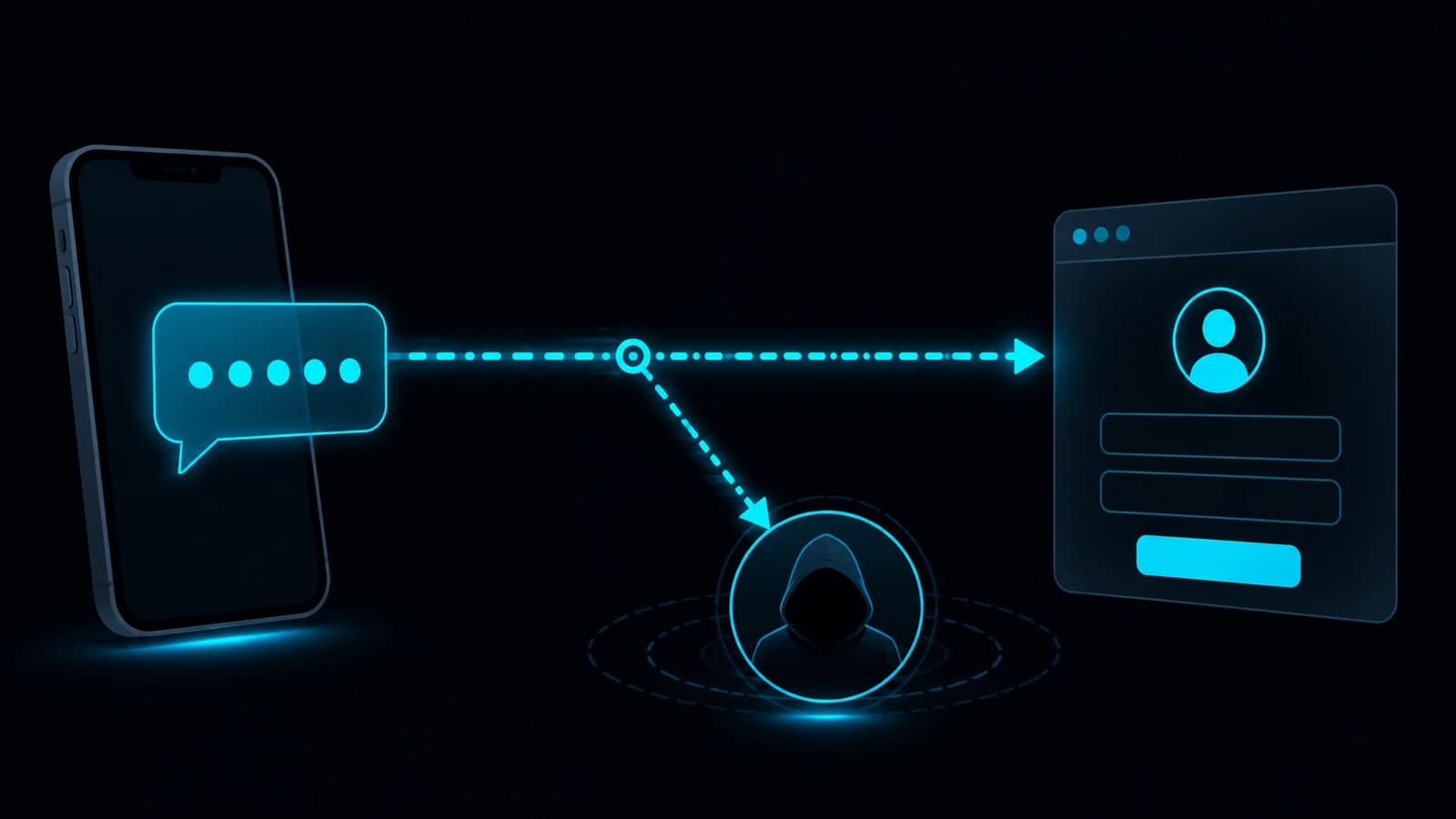
Weak OTP fails at four specific points — SIM swap, real-time phishing relay, SS7 interception, and MFA fatigue — and every one of them is a known, repeatable attacker technique in 2026.
Advanced MFA in 2026: What Actually Counts as a Factor
Multi-factor authentication only works when the factors are genuinely different — this 2026 reference clears up what counts as a real factor and what advanced MFA actually means.
Does OTP Prevent Breaches? The Attacks It Actually Stops in 2026
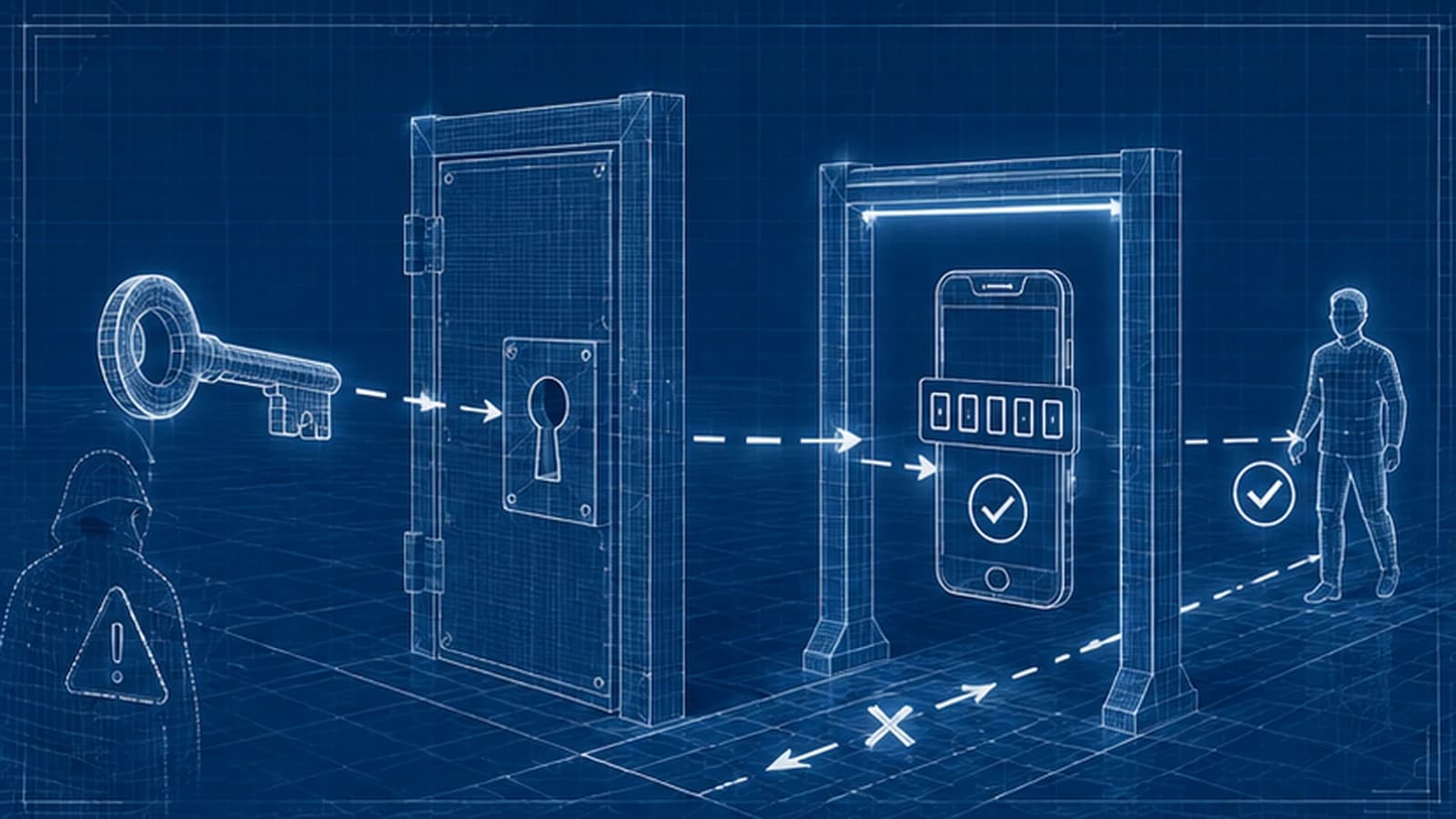
OTP does not stop every attack, but it reliably defeats credential stuffing, password-spray, basic brute force, and stolen-password reuse from unrelated breaches. The 2026 breach-prevention case for OTP — the attack chains it breaks, the ones it doesn't, and how to deploy it so the prevention benefit actually lands.