Articles in

MFA & Authentication

Multi-factor authentication strategy, methods, and buyer's guides.

Showing 11 posts

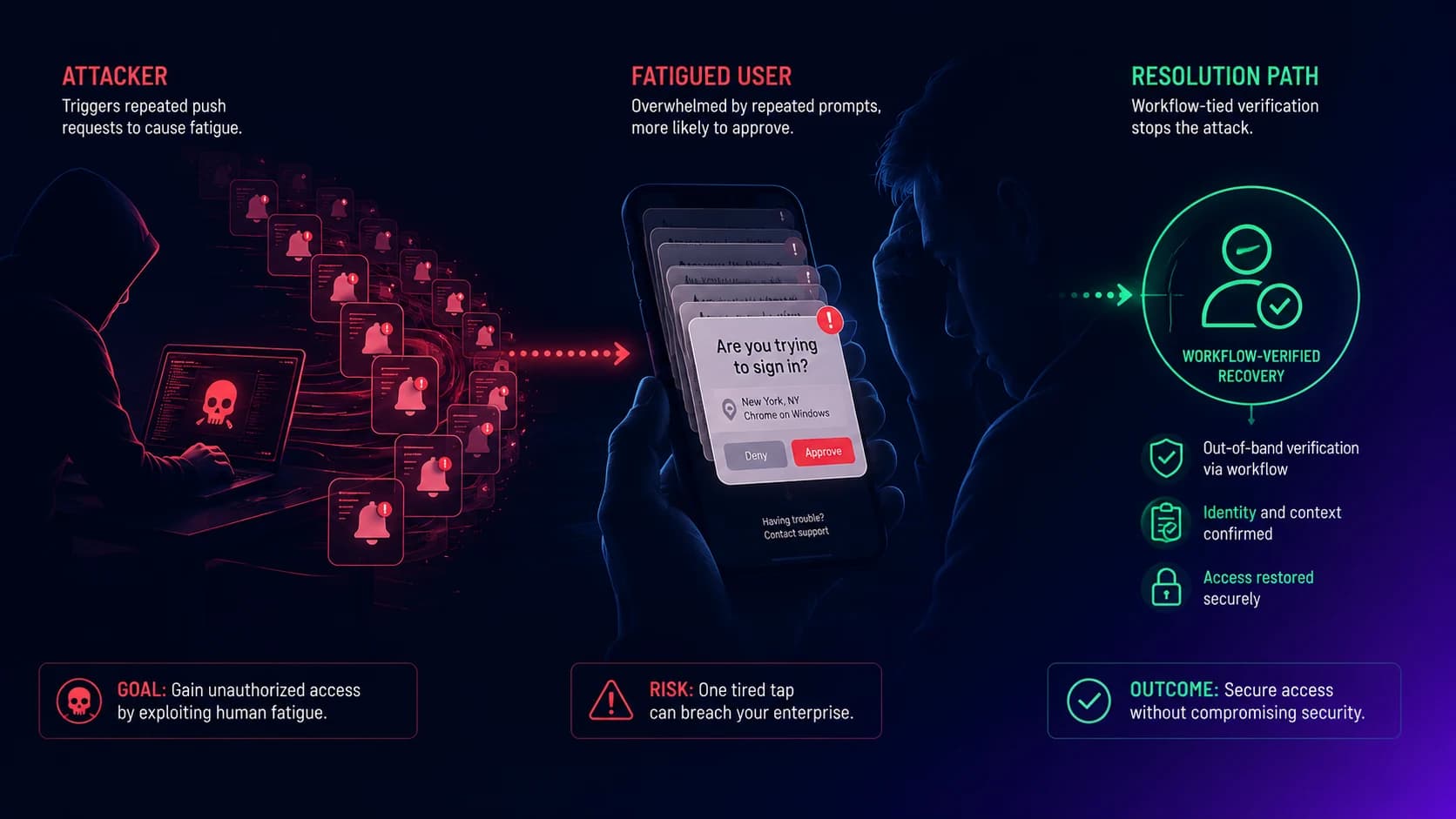
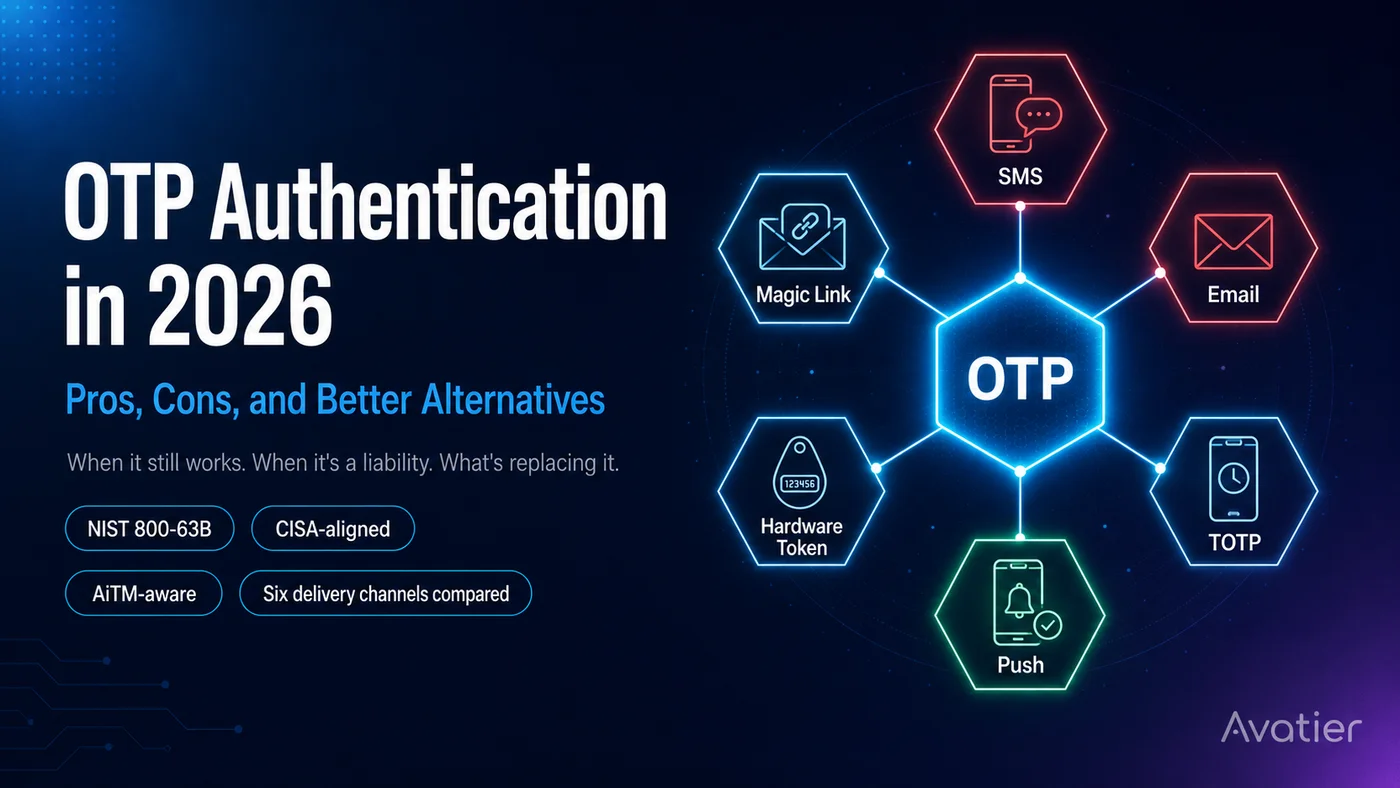
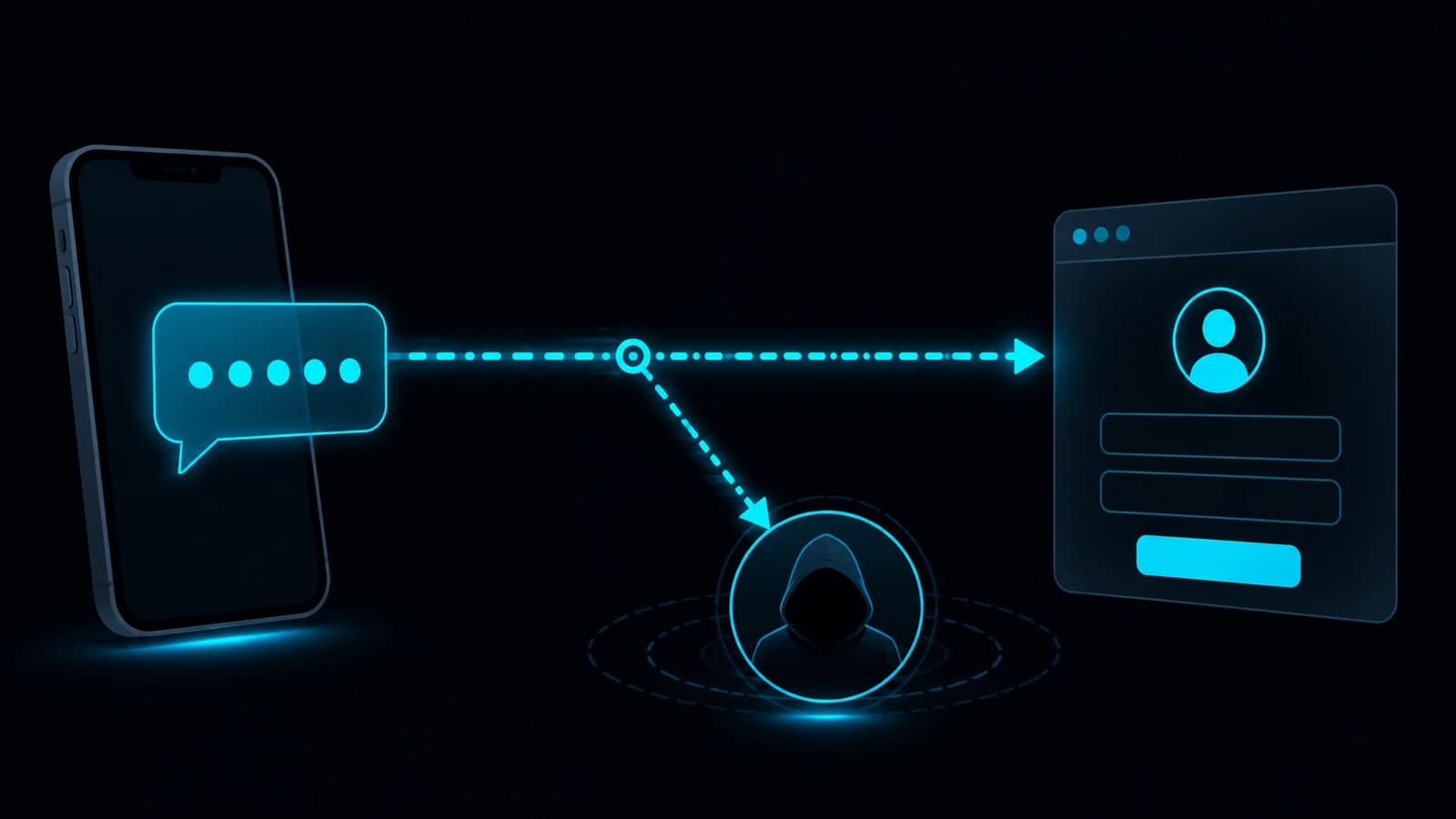
OTP failure case scenarios enterprise 2026 reference — the five categories of OTP failure (SMS interception via SS7 and SIM-swap, TOTP time drift and device loss, push MFA fatigue attacks, hardware token battery and physical loss, recovery-channel gap), the operational cost of each failure mode at enterprise scale, the phishing-resistant credential classes that eliminate each failure category, and the migration path from OTP-dependent to OTP-optional workforce authentication.
MFA & Authentication

OTP Failure Case Scenarios: The 2026 Enterprise Reference

One-time passwords fail in specific, patterned ways at enterprise scale — SMS interception through SS7 and SIM-swap, TOTP time drift and device loss, push-notification MFA fatigue, hardware token failures, and the recovery-channel gap that determines whether the failure produces a help desk ticket or a security incident. The 2026 enterprise reference on how OTP actually fails in production and what to deploy instead.

8 juli 2026Andre Arantes
Read more
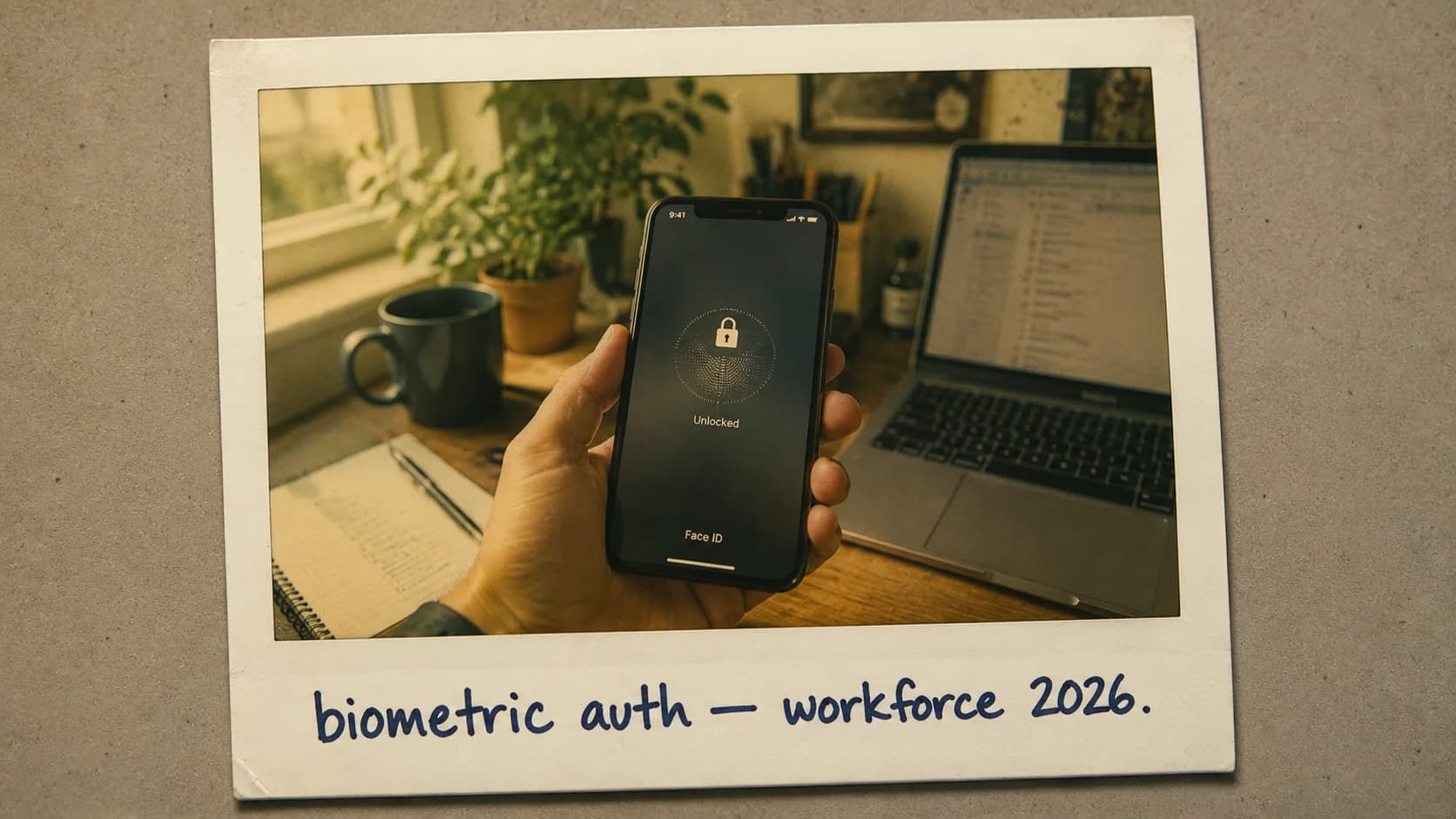
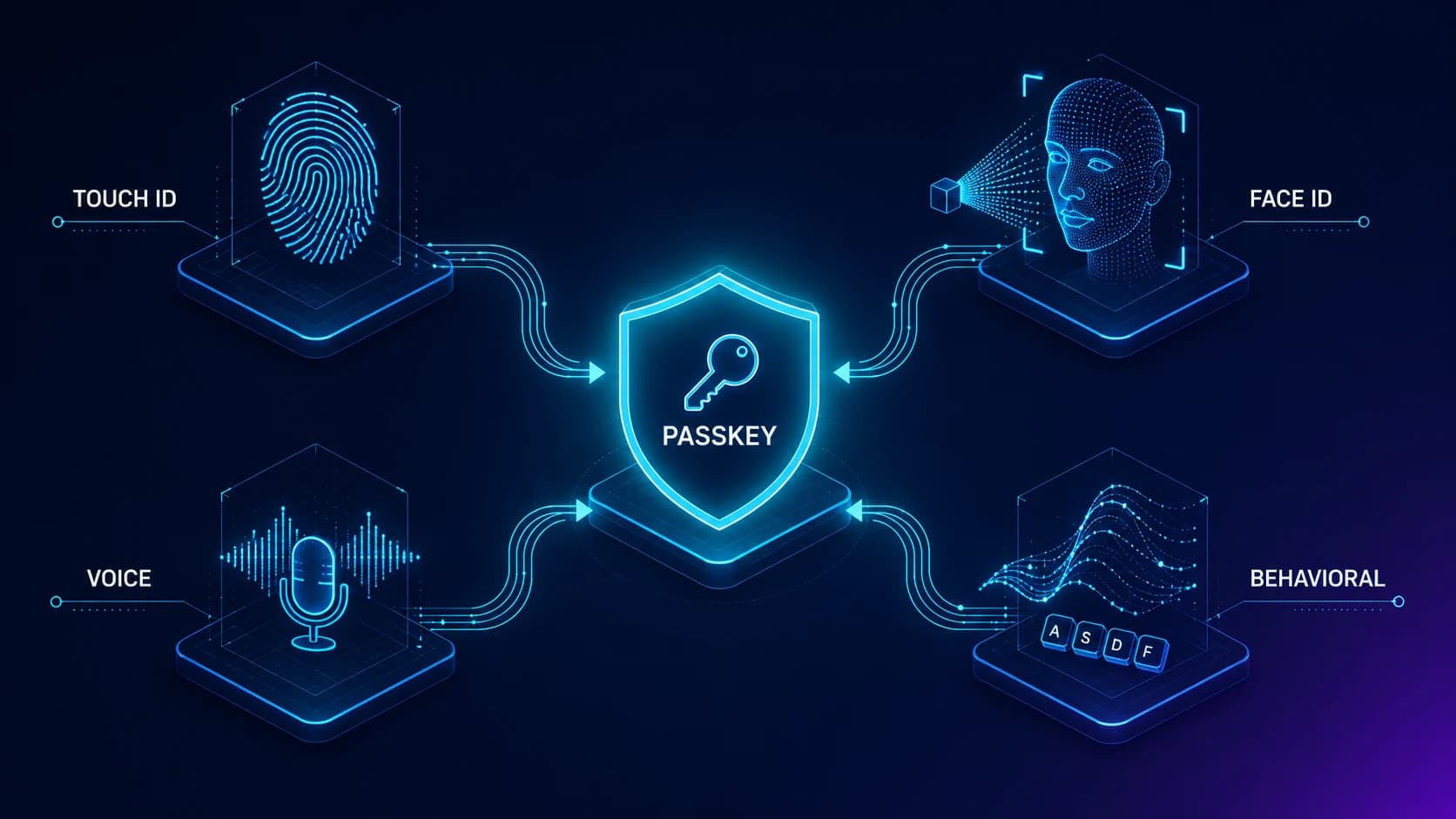
Biometric authentication on mobile devices 2026 — Face ID Touch ID Windows Hello for Business and Android biometric authentication, the secure enclave architecture that protects the credential, the FIDO2 authentication ceremony that composes platform biometric unlock with cryptographic assertion, the enterprise-deployment patterns for mobile-first workforces, and the segments where mobile biometric MFA still needs step-up to hardware keys or deviceless credentials.
MFA & Authentication

Biometric Authentication on Mobile Devices: The 2026 Enterprise Reference

Mobile biometric authentication has quietly become the primary phishing-resistant credential class for enterprise workforce authentication. The 2026 enterprise reference on what's actually happening on modern mobile devices, how platform passkeys and biometric unlock compose into FIDO2 authentication, and where mobile biometric MFA still needs step-up to a hardware key or deviceless credential.

6 juli 2026Andre Arantes
Read more
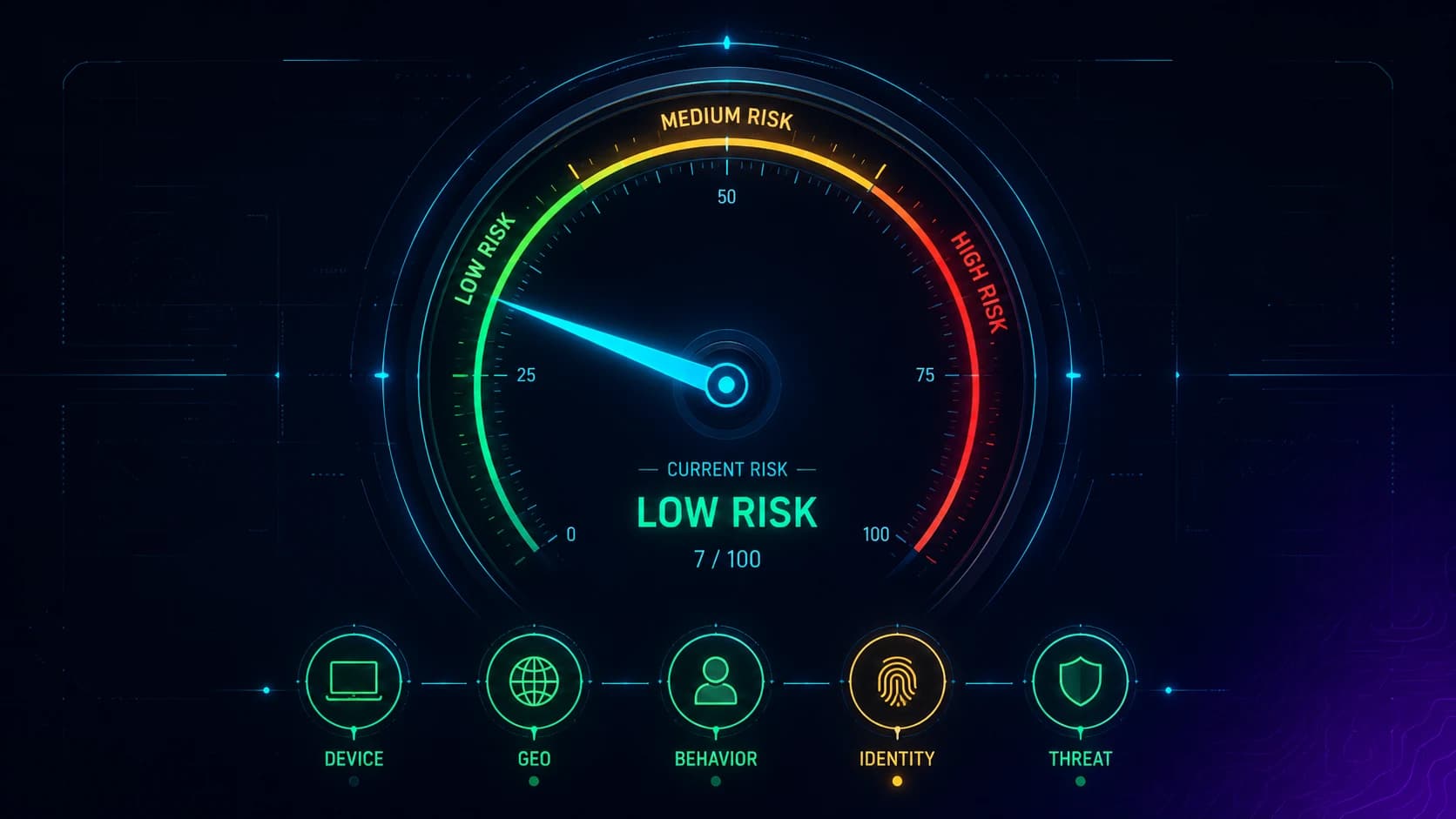
Adaptive authentication and risk-based MFA for enterprise 2026 — the runtime risk signals that feed adaptive decisions (device posture, geographic context, behavioral patterns, impossible travel, threat intelligence), the step-up authentication flows that respond to risk, and the architecture that composes adaptive logic with phishing-resistant MFA without producing user-experience friction.
MFA & Authentication

Adaptive Authentication and Risk-Based MFA for Enterprise 2026

Adaptive authentication evaluates risk signals at every session and adjusts the authentication requirement to match — stronger MFA when risk is high, frictionless access when risk is low. The 2026 enterprise reference on the signals that actually matter, the architecture that composes risk with phishing-resistant MFA, and where adaptive deployments break.

16 juni 2026Leonardo Cuenca
Read more
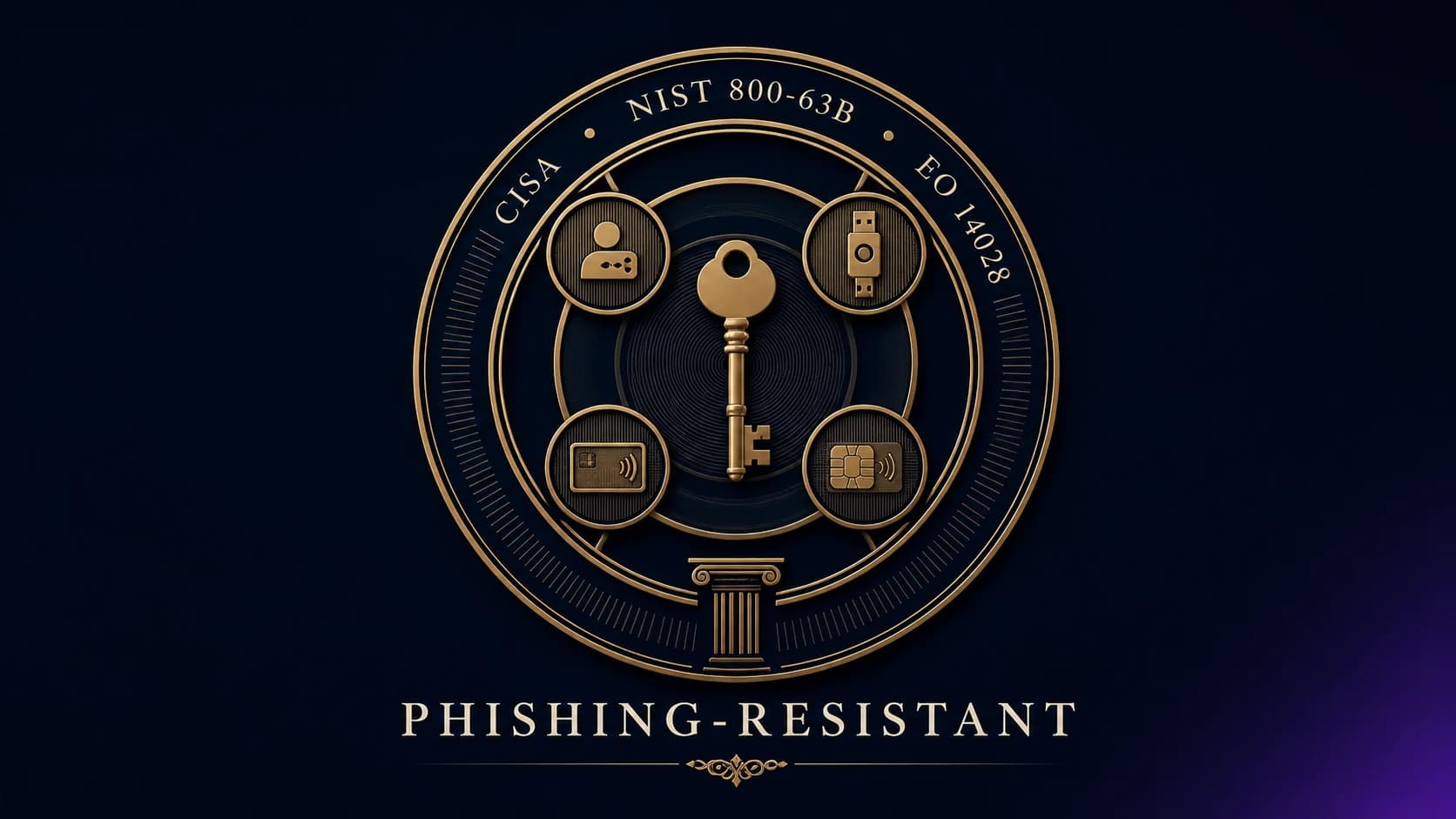
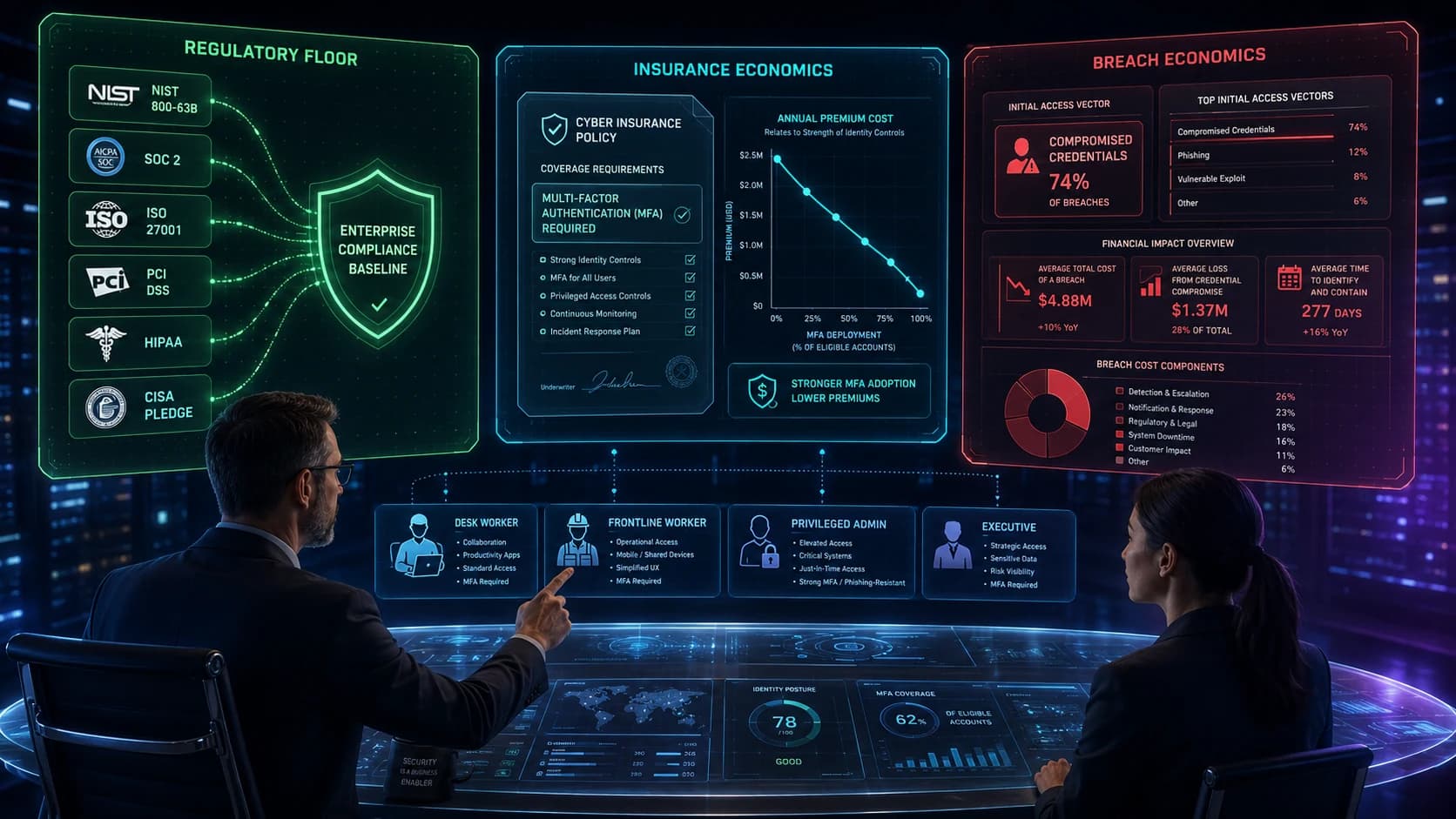
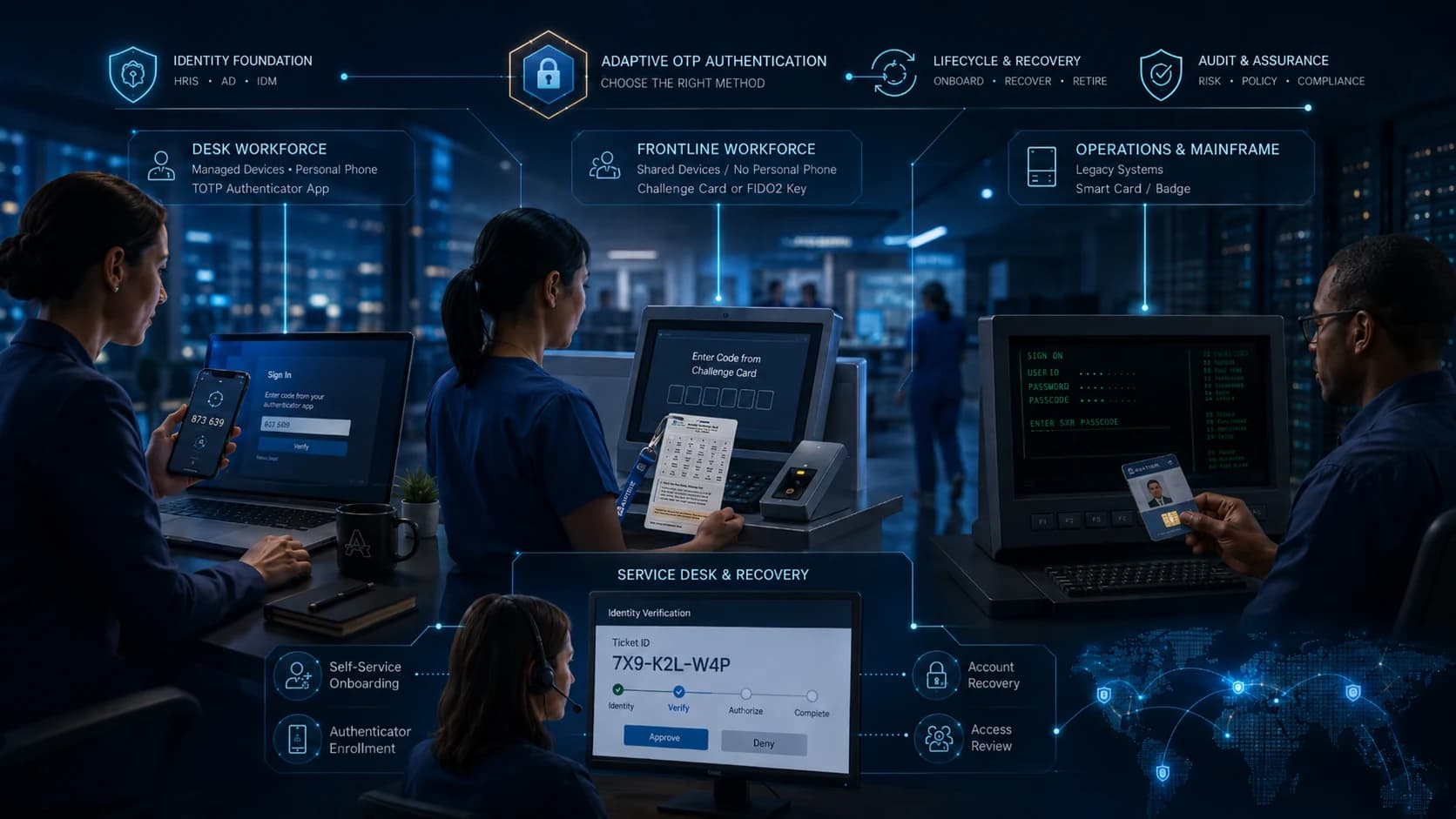
Phishing-resistant MFA for enterprise in 2026 — the regulatory framing (CISA, NIST 800-63B Rev. 4, Executive Order 14028), what qualifies (passkeys, hardware FIDO2 keys, deviceless FIDO2 cards, smart cards), what does not (SMS OTP, push-approval, soft-OTP), and the deployment architecture across managed devices, frontline, privileged accounts, and recovery channels.
MFA & Authentication

Phishing-Resistant MFA for Enterprise in 2026

Phishing-resistant MFA is the term CISA, NIST 800-63B Rev. 4, and Executive Order 14028 use for the authentication category that survives the attack patterns that defeated SMS, OTP, and push-approval MFA. The 2026 enterprise reference on what qualifies, what doesn't, and the deployment architecture across mixed workforces.

15 juni 2026Andre Arantes
Read more