We Don't Just Sell Identity Security. We Use It.
Why Avatier uses its own identity products internally — and why Microsoft, Rippling, and other SaaS leaders are doing the same with their own toolchains.
Why Avatier uses its own identity products internally — and why Microsoft, Rippling, and other SaaS leaders are doing the same with their own toolchains.
A few days from now, I'll hit my first 90 days at Avatier.
That means I'm also a few days away from something every employee knows is coming eventually: my first password rotation.
Which is funny, because I finally just remembered the one I have now.
But honestly, that little moment is exactly why this story matters.
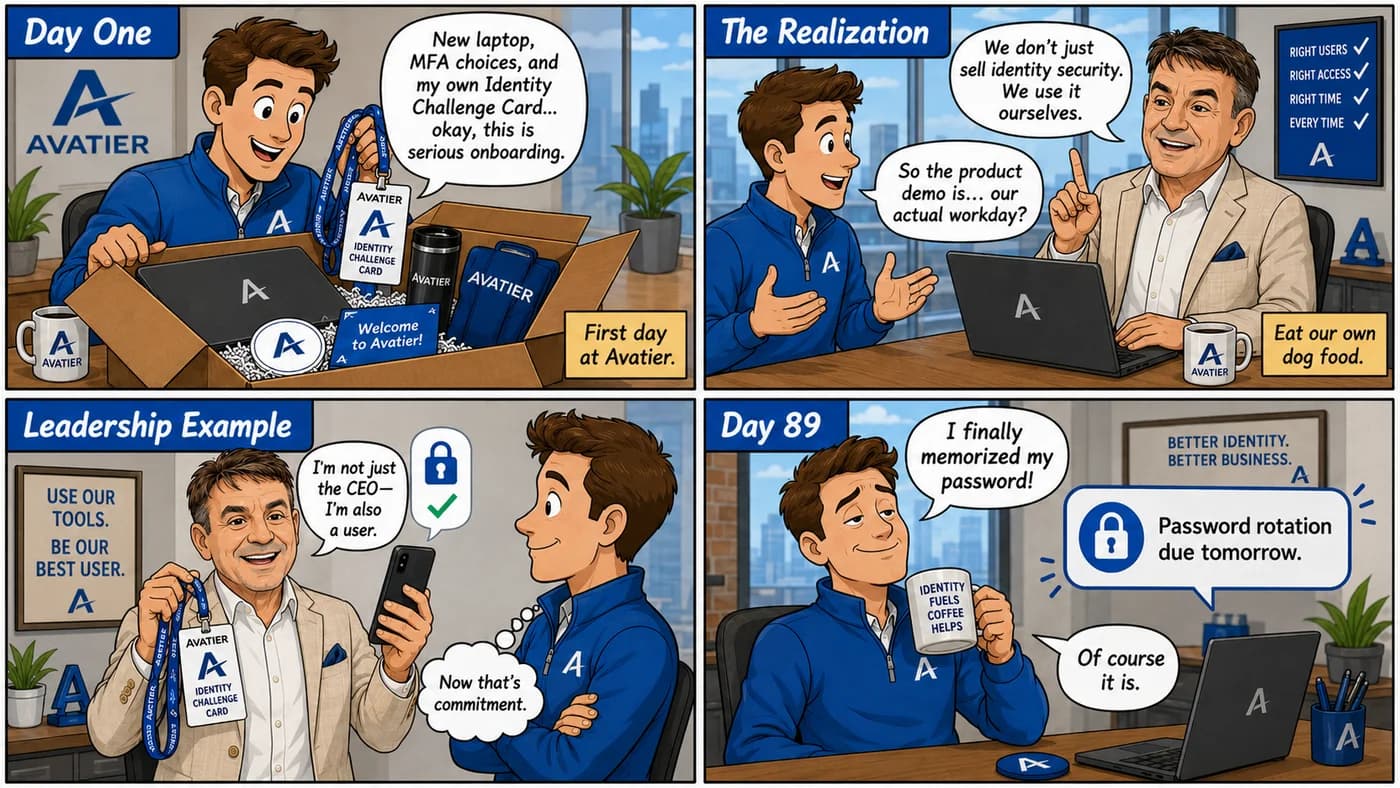
When I started at Avatier, my first real experience with the company was not a marketing deck, a product demo, or a strategy meeting. It was identity.
Day one was access. Provisioning. Authentication. MFA choices. My Identity Challenge Card. My computer. My first login.
Before I ever talked about Avatier's products externally, I experienced them internally.
That was the moment I realized something important:
Avatier does not just sell identity and access management. We use it.
And yes, to borrow from the old HairClub for Men slogan:
Nelson is not just the CEO of Avatier. He is also a user.
Eating our own dog food
In SaaS, there is a phrase people love to use: "eat your own dog food."
It means you use the product you sell. Not in a polished demo environment. Not only when customers are watching. But inside your own company, in your actual workflows, with your real employees, your real friction, your real onboarding, your real resets, and your real authentication experience.
That phrase came up recently on stage at SaaStr AI 2026 when Grant Lee, CEO and Founder of Gamma, talked about the importance of companies using their own products internally.
It also came through in another powerful example from Anique Drumrigh, VP of Product for Rippling IT. She talked about avoiding over-delegation in product management and staying close to the actual customer experience. One example that stood out to me was that she still spends time doing MFA reset work for colleagues using Rippling IT.
That is not busy work.
That is product research.
That is customer empathy.
That is dogfooding.
Because when product leaders stay close to the pain, they build better products.
Microsoft is sending the same message
This idea is not just happening in startups or SaaS conference talks. It is showing up at the biggest technology companies in the world.
A recent article from TheStreet covered Microsoft's internal decision to cancel most Claude Code licenses for engineers in its Experiences and Devices division and redirect employees toward GitHub Copilot CLI, Microsoft's own AI coding tool. The article frames this as a move toward toolchain unification, cost control, and greater internal use of Microsoft-controlled products. (TheStreet)
In other words, Microsoft is telling its own teams: we are going to use what we build.
That matters.
Microsoft has made AI central to its product portfolio, invested heavily in OpenAI, and publicly discussed how much of its own code is now written with generative AI. But the deeper message is not just about AI tools. It is about operational credibility. If you build the product, your own teams should be one of the proving grounds for it.
That is the same principle I saw on day one at Avatier.
Identity products should be proven internally first
There are some products where dogfooding is nice.
With identity, it is essential.
If a company sells authentication, access governance, password management, reset workflows, or identity recovery, then its internal employee experience should reflect that belief.
You cannot credibly talk about secure onboarding if your own onboarding is messy.
You cannot preach better MFA if your own employees do not use strong MFA.
You cannot talk about password rotation, reset security, and identity verification if your own company treats those things like an afterthought.
At Avatier, I did not just hear about the product.
I used it.
I selected my MFA options. I received my Identity Challenge Card. I went through the real process of being provisioned as a new employee. I logged into my machine and experienced the system from the employee side, not just the marketing side.
That gave me a completely different perspective.
As someone in AI growth marketing, I spend a lot of time thinking about messaging, positioning, trust, and credibility. The strongest marketing claims are not the ones that sound clever. They are the ones that are already true inside the company.
The best product marketing starts with the employee experience
A lot of companies want to tell the market they are innovative.
But the real question is:
- Are they operating that way internally?
- Are employees actually using the tools?
- Are leaders close enough to the workflow to understand the friction?
- Are product teams learning from their own environment before asking customers to trust the platform?
That is why the stories from SaaStr AI stood out to me. Grant Lee talking about eating your own dog food. Anique Drumrigh staying close to MFA reset work. Microsoft consolidating employees toward its own AI tooling.
The pattern is clear.
The companies that win are not just the companies that build great products.
They are the companies that use those products, stress-test them, find the rough edges, and improve them from the inside out.
My 90-day password rotation is a reminder
So now, here I am, almost 90 days in.
The new employee feeling has worn off. I know where things are. I know who to ask. I know what meetings I'm walking into. I even finally remembered my password.
Which, of course, means it is almost time to rotate it.
There is something funny and very real about that.
But there is also something valuable in it.
Password rotation is not just a compliance checkbox when you work in identity. MFA is not just a feature. Reset workflows are not just help desk tasks. Login security is not just something we write about in blog posts.
It is part of our daily experience.
And that is the point.
At Avatier, we do not just build identity security for other companies.
We live with it.
We use it.
We learn from it.
We improve it.
We eat our own dog food.
And that may be one of the strongest reasons customers can trust what we build.
About the author

More from Perspectives

Cybersecurity Awareness Month 2026: How Identity Attacks Get In
Most breaches are told in vocabulary nobody defines. A Cybersecurity Awareness Month 2026 guide to the nine identity attack vectors, the terms behind them, and what breach letters leave out.
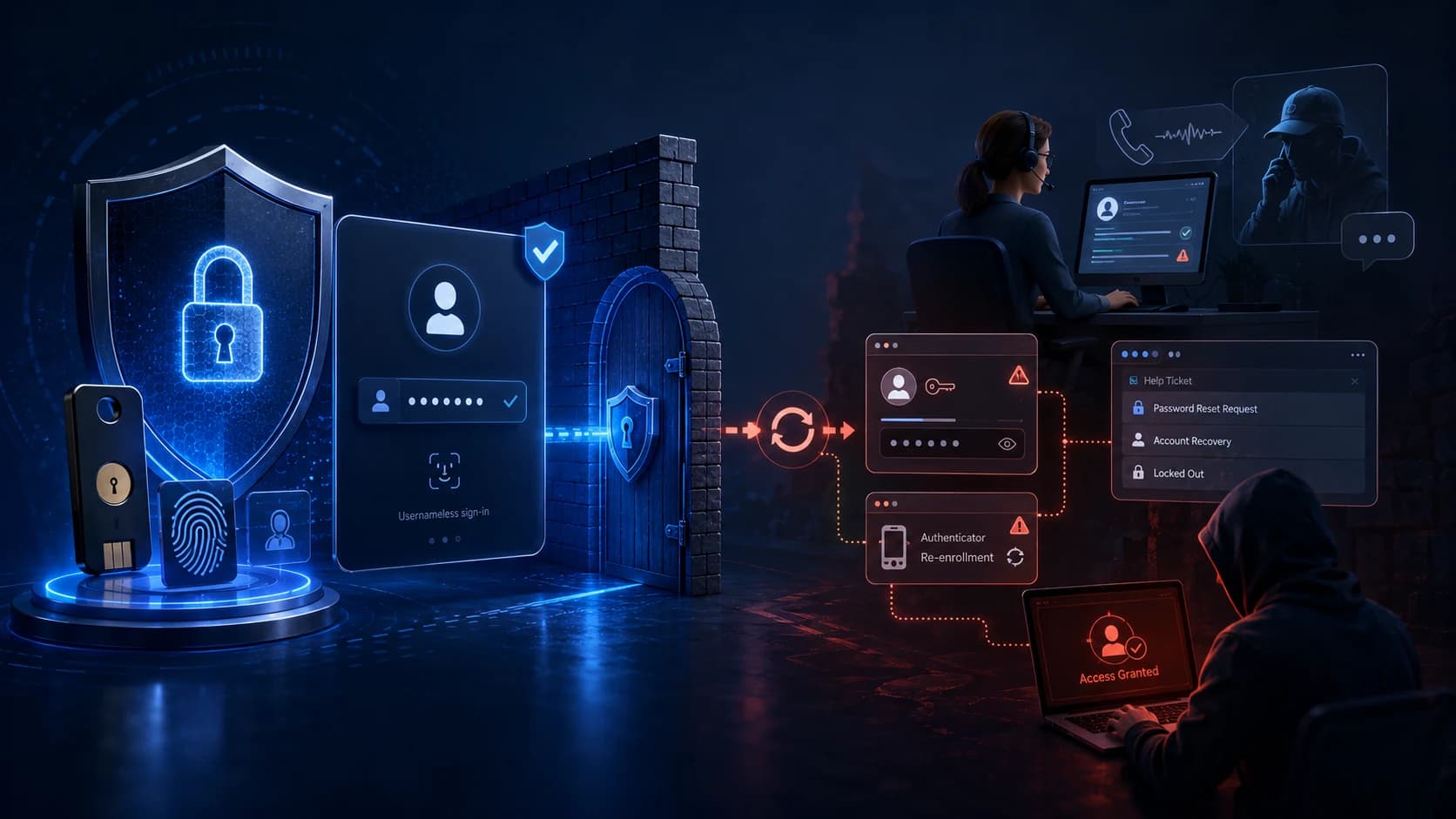
Beyond Foundational MFA in 2026: The Recovery Channel Gap
Phishing-resistant MFA is the right answer for the front door. It does not protect the recovery channel, which is where the 2026 attacks are landing.
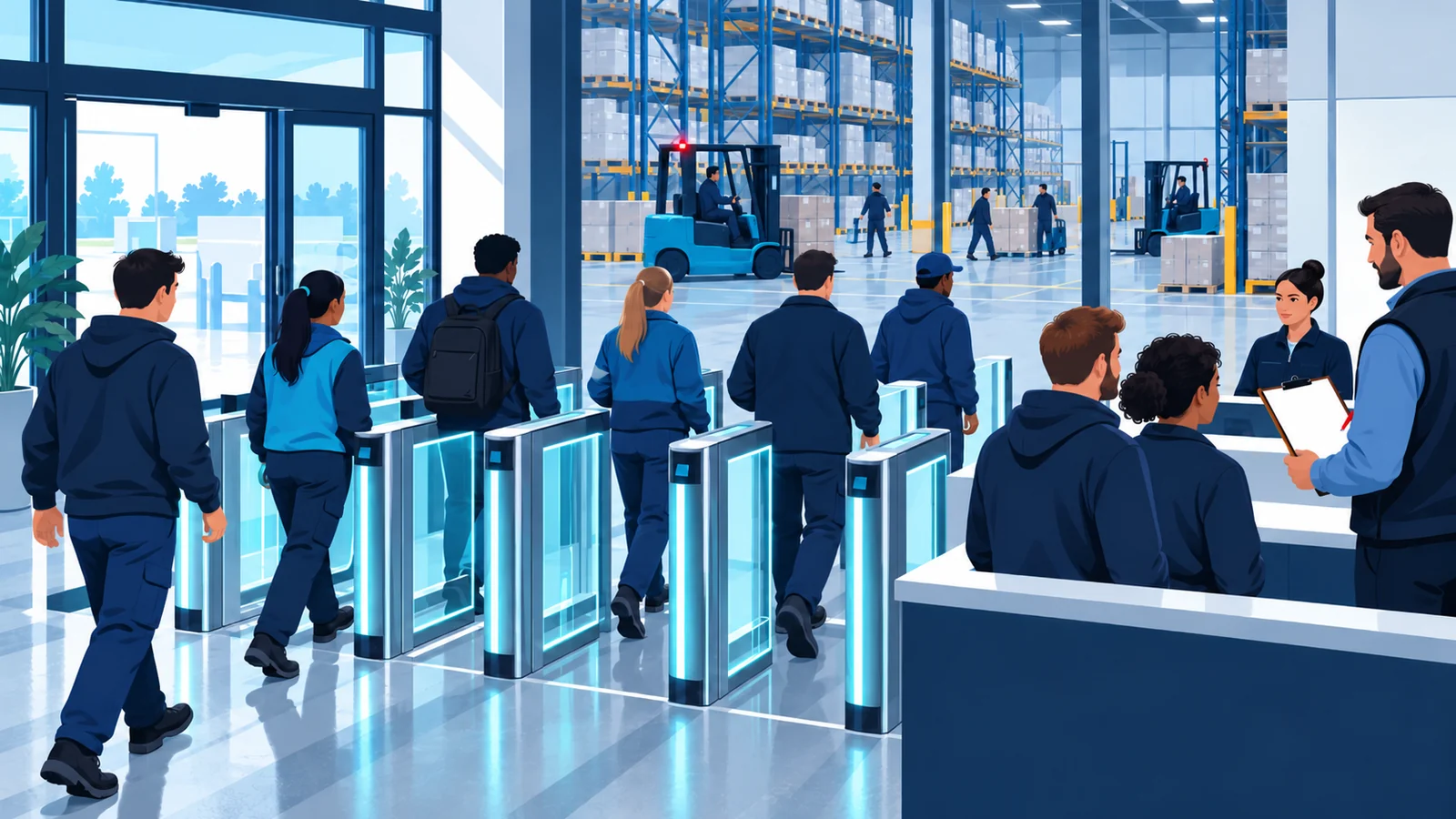
Retiring MFA Exceptions: Full-Workforce MFA with Avatier
An MFA exception register lists the workers device MFA can't reach. How Avatier's Identity Challenge Card lets policy route each of them to a method, so exceptions can be retired.