Credential Stuffing Defense: Stopping Password-Reuse Attacks in 2026
Credential stuffing replays username and password pairs leaked from other breaches against your login, at automated scale, until reused passwords hit. The 2026 reference on how the attack chain works, why it differs from brute force and password spraying, and the layered defenses that actually stop it.

Credential stuffing replays username and password pairs leaked from other breaches against your login, at automated scale, until reused passwords hit. The 2026 reference on how the attack chain works, why it differs from brute force and password spraying, and the layered defenses that actually stop it.
- Credential stuffing is the automated replay of username and password pairs stolen in other companies' breaches against your login, betting that some users reused the same password everywhere — and enough of them have that the attack pays off at scale.
- It is not brute force: brute force guesses many passwords against one account, while credential stuffing replays one already-valid password across many accounts, so it succeeds without ever guessing anything and slips under lockout thresholds built for guessing.
- The attack chain is cheap and industrialized — leaked credential lists are bought or downloaded, bots replay them through proxies and anti-detection tooling, reused passwords authenticate, and confirmed hits become account takeover, fraud, or a foothold for lateral movement.
- No single control stops it; the defense is layered — phishing-resistant MFA and passkeys, bot detection and rate limiting, breached-password screening, and anomaly, velocity, and behavior monitoring each break a different link in the chain.
- The durable fix is to stop depending on a shared secret the attacker already has: passwordless and phishing-resistant authentication removes the reusable password that credential stuffing exists to exploit.
Credential stuffing is the automated replay of username and password pairs — stolen in someone else's breach — against your login, at industrial scale, in the bet that some of your users reused those same passwords on your service. The attacker is not guessing. Every pair on the list was a real, working credential somewhere, harvested from a breach of a completely unrelated company. The only question the attack asks, millions of times over, is whether the person who used that password on the breached site also used it here. Because password reuse is pervasive, the answer is "yes" often enough to make the whole exercise profitable, even when the success rate on any individual attempt is a fraction of a percent.
That single fact — that the credential came from elsewhere and is already known to be valid — makes credential stuffing so different from the attacks security teams instinctively defend against, and so effective against controls tuned for those other attacks. This piece is the 2026 enterprise reference on how the attack chain runs, the distinctions from brute force and password spraying that determine which defenses work, and the layered defenses that genuinely stop it.
What credential stuffing is, precisely
Strip credential stuffing to its mechanism and it has three ingredients: a list of real credentials obtained from other breaches, automation to replay them, and a target login that accepts a username and password. The attacker feeds the list to a tool that submits each pair, records which succeed, and hands the confirmed hits off for whatever comes next — fraud, data theft, resale, or lateral movement into the enterprise.
The credential list is the heart of it. Billions of leaked username and password pairs circulate — aggregated from years of breaches, combined into massive collections, and traded or given away in criminal markets. An attacker does not breach your systems to get these; they already exist because some other service was breached, and the same humans who used it also work for your company. The list is the ammunition, and it is effectively free.
What separates credential stuffing from a nuisance is scale and disguise. Modern stuffing runs through large networks of proxy IP addresses so the attempts appear to come from thousands of locations rather than one obvious source, using tooling that rotates user agents, mimics browser behavior, spaces out requests to imitate human timing, and sidesteps simple challenges. Each attempt is engineered to look like an ordinary sign-in. The danger is not any single request — it is the aggregate of millions of them, quietly finding the accounts where a password was reused.
The attack chain, step by step
Credential stuffing is industrialized, and understanding it as a chain matters because each link is where a specific defense can break it.
Acquire the credentials. The attacker obtains a corpus of leaked username and password pairs — downloaded from a public dump, bought from a market, or assembled from previously collected breaches. No interaction with the target is required at this stage, which is why the target has no visibility into it.
Prepare the automation. The pairs are loaded into stuffing tooling configured with a pool of proxy IP addresses, request patterns tuned to evade rate limits, and settings to imitate legitimate client behavior, aimed at the target's login endpoint or authentication API.
Replay at scale. The tool submits pairs against the target, typically making only one or a small number of attempts per account so that per-account lockout never triggers. Attempts are spread across the proxy pool and paced to blend with normal traffic. Most attempts fail — the user did not reuse that password here, or the account does not exist — and the failures are expected and cheap.
Harvest the hits. Where a user did reuse the password, the login succeeds and the tool records a confirmed valid credential — the product of the campaign. Because the credential was already correct, a hit lands on the first try, with no laborious guessing phase to detect.
Monetize or escalate. Confirmed accounts are used directly for fraud or data theft, resold as validated credentials, or — in the enterprise case that matters most here — used as a foothold to move laterally and reach systems well beyond the account that was stuffed.
The chain is cheap end to end, and that cheapness is the strategic problem: an attacker can run a large campaign against many targets at once, at low cost per attempt and with no need to breach anyone to get started.
Credential stuffing versus brute force — the distinction that decides your defense
The single most important thing to understand about credential stuffing is how it differs from brute force, because the two attacks are opposite shapes and defenses built for one do almost nothing against the other.
Brute force targets one account and throws many passwords at it. The attacker picks a username and works through a dictionary, a list of common passwords, or an exhaustive combination space, guessing repeatedly until something works. It is a guessing attack, concentrated on a single account, and it is loud — dozens or hundreds of failed attempts against the same username in a short window. This is exactly what per-account lockout was designed to stop: after a handful of failures, the account locks, and the guessing halts.
Credential stuffing replays one already-valid password across many accounts. The attacker is not guessing; every credential on the list was correct somewhere, and the attack simply tests whether it is also correct here. Crucially, this means the attack makes only one or two attempts per account before moving on, because there is nothing to guess — the pair either matches or it does not. That behavior slips cleanly under per-account lockout, which is watching for many failures against one account and sees only one or two. And because the passwords are real, the attempts that land on a reused account tend to succeed immediately, with no failed-attempt trail to raise an alarm on that account at all.
The practical consequence is stark. An enterprise that has invested entirely in per-account lockout and password-complexity rules has built a strong defense against brute force and left credential stuffing almost untouched. Lockout thresholds never trip because the attack never concentrates on one account, and complexity rules do not help because the reused password was already complex enough to be accepted on the breached service. The controls are working exactly as designed — against an attack that is not the one being run. Recognizing that stuffing is replay, not guessing, is what redirects defense toward the controls that match its shape: watching the population rather than the single account, and removing the value of a valid-but-reused password.
Credential stuffing versus password spraying
A third pattern rounds out the picture and is worth distinguishing cleanly, because it is often lumped in with stuffing. Password spraying takes one or a few very common passwords — a season and year, the company name with an exclamation point, a well-known default — and tries each against many accounts. Like stuffing, it deliberately spreads thin across accounts to avoid per-account lockout, making it a low-and-slow attack rather than a loud one.
The difference is the source of the password. Spraying guesses a popular password and hopes some users chose it; stuffing replays a specific password a specific user is already known to have used, because it leaked from another breach. Spraying's success depends on users choosing weak, predictable passwords; stuffing's depends on users reusing passwords, however strong, across services.
For defense the two overlap more than brute force does with either, because both evade per-account lockout by spreading across the population, and controls that watch the whole login surface catch both. But the root-cause fixes differ: spraying is blunted by banning common and predictable passwords, while stuffing is blunted by screening against breach corpora and by removing the reusable secret altogether.
Why credential stuffing keeps working
The uncomfortable answer is that it works because of a human behavior no login screen can prevent on its own: password reuse. People accumulate more online accounts than anyone can hold unique passwords for, so they reuse a small set across personal and work services. The moment any one of those services is breached, every other place the same person reused that password becomes exposed — very often including their employer.
Layered on top of reuse is an economic asymmetry that favors the attacker completely. The credentials are already leaked and cost little or nothing, the automation is commodity tooling, and proxy networks to spread the traffic are cheap and plentiful. The success rate does not need to be high — across millions of pairs, even a tiny fraction of reused passwords produces a large number of working logins. The attacker spends little and needs to be right only rarely; the defender must be right every time across the entire user base.
This is why credential stuffing has proven so durable. Every new breach anywhere refreshes the ammunition supply. As long as the primary authenticator is a reusable shared secret a user can carry from one service to another, leaked pairs from other breaches remain a live threat to your login — which points directly at why the strongest answer is to stop relying on the shared secret at all.
The layered defense that actually stops it
No single control stops credential stuffing, because the attack has several independent links and a determined operator will route around any one barrier. The effective posture is layered, with each layer breaking a different part of the chain so that defeating the whole becomes expensive enough that the attacker moves on.
Phishing-resistant MFA and passkeys
Multi-factor authentication is the highest-leverage single layer, because it severs the connection between a valid password and a completed login: a replayed password that clears the first factor still faces a second requirement the attacker's list cannot satisfy. But the strength depends entirely on the factor. Phishable factors — SMS codes, one-time passwords, and simple push approvals — raise the bar against pure automation, yet a sophisticated operator can pair stuffing with a real-time proxy or MFA-fatigue pressure to defeat them. Phishing-resistant factors are the durable answer: passkeys and hardware security keys built on FIDO2/WebAuthn are cryptographically bound to the legitimate origin, so they cannot be replayed against your site or relayed through a fake one. Moving the highest-value logins to phishing-resistant methods is the difference between an MFA layer that slows credential stuffing and one that structurally defeats it, as Phishing-Resistant MFA for the Enterprise details.
Breached-password screening
If credential stuffing depends on users holding passwords that already appear in leaked corpora, then refusing to let those passwords exist on your service removes the ammunition at its source. Breached-password screening checks each password against known-leaked credential corpora and rejects or forces a reset on any that match. Run it at registration, at every password change, and on a recurring basis against the standing population as new breach data surfaces — because a password safe when chosen can appear in a leak months later. It shrinks the pool of stuffable accounts directly and composes cleanly with MFA: screening keeps known-bad passwords out, while MFA protects the accounts whose passwords have not yet surfaced in any corpus.
Bot detection and rate limiting
Credential stuffing is an automation problem before it is a credential problem — the volume that makes it dangerous only exists because bots can attempt pairs cheaply, so attacking the automation attacks the economics. Rate limiting on the login path — applied per account, per source, and across the endpoint as a whole — caps how quickly an attacker can cycle a list. Bot management distinguishes automated traffic from human sign-ins through device fingerprinting, behavioral signals, and adaptive challenges, then throttles or blocks the automated share. Sophisticated operators evade both by rotating through large proxy pools and mimicking human timing, so neither is sufficient alone; together they raise the cost per attempt enough that many campaigns abandon a hardened target, and they buy the monitoring layers time to react.
Anomaly, velocity, and behavior monitoring
Because credential stuffing spreads thin across accounts to evade per-account lockout, the signal is not in any single account — it is in the population. Monitoring that watches the whole login surface catches what per-account controls miss: a spike in overall login volume, an unusual failure-to-success distribution, a burst of attempts from a rotating set of unfamiliar IP addresses, impossible-travel patterns, or a wave of first-time-seen devices. Feeding these signals into adaptive, risk-based authentication lets policy respond dynamically — stepping up, challenging, or blocking when the pattern matches a stuffing campaign, while leaving ordinary sign-ins untouched. Adaptive Authentication and Risk-Based MFA covers the signals and scoring that make this layer accurate, and monitoring is also what detects a campaign already in progress.
Removing the reusable secret entirely
The most durable defense addresses the root cause: if there is no reusable password, there is nothing to stuff. Passwordless authentication built on passkeys and other phishing-resistant credentials removes the shared secret the entire attack exists to exploit — an attacker holding a list of leaked passwords has nothing to replay against an account that no longer authenticates with a password at all. This does not happen overnight across a large enterprise, and password-dependent paths often persist in recovery and legacy systems that must be hardened alongside the primary login. But the direction is unambiguous, and the best passwordless authentication solutions exist precisely to retire the credential that credential stuffing feeds on. Every account moved off reusable passwords is one permanently removed from the stuffable population.
Where credential stuffing defense breaks down
Even well-intentioned programs leave gaps, and the gaps follow predictable patterns worth naming.
Defending only the primary login. Teams harden the main sign-in and leave account-recovery and password-reset paths weaker. An attacker who cannot stuff the front door pivots to a poorly protected reset flow, so recovery has to be as strong as the login it restores — a theme that runs through the broader MFA bypass techniques and how to defend against them.
Phishable MFA treated as done. Enabling one-time codes or push approvals and declaring MFA complete leaves the door open to real-time proxy and fatigue-based attacks that pair naturally with stuffing. The highest-value logins need phishing-resistant factors, not merely any second factor.
Legacy and non-interactive authentication. Older protocols and machine-to-machine endpoints that still accept a password, and often bypass MFA and monitoring, become the soft target once the interactive login is hardened. These paths need explicit attention or they quietly reopen the gap.
Deviceless and shared-workstation segments. Defenses that assume a personal smartphone or registered biometric device exclude frontline, contractor, and secure-facility populations. If those segments fall back to a reusable password because the strong method does not fit them, they remain fully exposed — which is why a deviceless phishing-resistant factor matters for real coverage.
Screening that runs once. Breached-password screening applied only at registration misses the larger case: a password clean when chosen that later appears in a breach. Without recurring screening against fresh corpora, the population accumulates stuffable credentials over time.
What Avatier ships toward this problem
Avatier Identity Anywhere closes credential stuffing across the layers that matter rather than at a single point. At the credential layer, phishing-resistant authentication — FIDO2/WebAuthn passkeys for desk workers and hardware FIDO2 keys for the highest-assurance logins — removes the replayable shared secret the attack depends on. For the segments that passkeys and personal-device methods structurally do not reach — frontline shared workstations, contractors without managed devices, secure facilities where phones are not permitted — the Avatier Identity Challenge Card provides a deviceless phishing-resistant factor, so those users are never quietly left on a reusable password a stuffing campaign can replay.
At the policy layer, adaptive risk-based authentication evaluates device posture, location, velocity, and behavior to recognize the anomalous burst patterns credential stuffing produces across the population, and to step up or block accordingly rather than treating every login identically. Self-service password management through Password Station supports breached-password screening and workflow-verified recovery, so the reset path does not become the soft way back in that hardened logins otherwise invite. Integration with Identity Anywhere Lifecycle Management keeps the account population authoritative — deprovisioned and dormant accounts, frequent stuffing targets, are closed rather than left as standing exposure.
The layered pattern works regardless of vendor; the point is not that credential stuffing can only be solved by buying Avatier. But the integrated combination of phishing-resistant credentials, a deviceless factor for the segments personal devices miss, population-level adaptive monitoring, and hardened recovery is what separates an enterprise that has actually reduced its stuffable surface from one that enabled MFA on the primary login and assumed the problem was handled. The Avatier Trust Center publishes the compliance posture this operates within.
The honest closing
Credential stuffing endures because it exploits a gift the defender did not give and cannot revoke: passwords that leaked from someone else's breach, replayed by users who reused them. It is not brute force and not password spraying, and treating it as either sends defense in the wrong direction — per-account lockout and complexity rules watch for a guessing attack that never comes while replay spreads quietly across the population and lands on the accounts where a password was reused. The controls that match the attack's real shape are different: MFA that severs valid password from completed login, breached-password screening that removes the ammunition, bot detection and rate limiting that break the automation's economics, and population-level monitoring that sees the burst no single account reveals.
Layered together, those controls make a campaign expensive enough that most attackers move to a softer target. But the durable answer is to stop depending on the thing the attack needs. Get the layers right and you blunt the attack today; retire the reusable secret with phishing-resistant, passwordless authentication and you take the account off the board for good.
About the author

More from MFA & Authentication
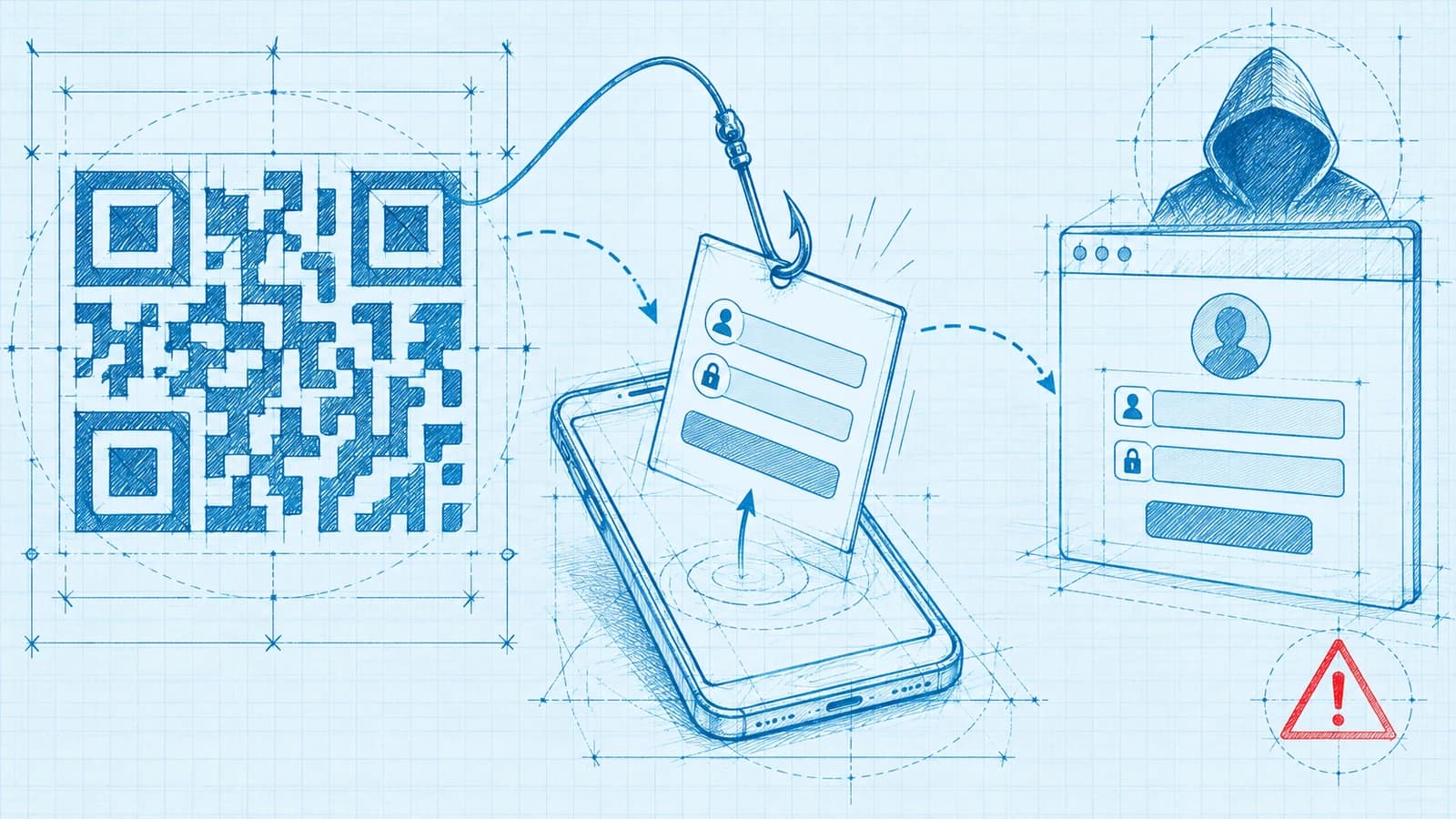
QR Code Phishing (Quishing): How It Works and How to Defend in 2026
Quishing hides a malicious URL inside a QR code, slips past email link scanners, and moves the victim onto a personal phone where the fake login is hard to inspect. The 2026 reference on how the attack runs and the phishing-resistant defenses that actually stop it.

Step-Up Authentication: Re-Authentication for Sensitive Actions 2026
Step-up authentication keeps baseline login light for routine work and demands fresh, stronger verification the moment an action turns sensitive. The 2026 reference on what triggers a step-up, how users complete one, and how it differs from adaptive authentication.

MFA Bypass Techniques and Defense: The 2026 Enterprise Guide
Attackers get past MFA without breaking the cryptography — SIM swap, adversary-in-the-middle, session and token theft, MFA fatigue, and consent phishing. How the AiTM bypass chains, and the defenses that actually close it.